|
Sarajevo ADR Training Programme
An ADR Practical Training Programme was held in Sarajevo March 31 and April 1, 2009 as part of a joint activity between the DBF and the International Finance Corporation which is part of the World Bank Group. This was a regional training programme encompassing mediation and dispute boards in construction and was presented to participants from Bosnia-Herzegovina, Serbia, and Montenegro. The programme was so successful that a separate special edition of this Newsletter wil be published later this month with all of the details and schedule for future activities in the region.
Winter Symposium Prize Announcement
In last month's Newsletter we announced the DBF Winter Symposium on the the Role of ADR & Dispute Boards In The Effective Rebuilding of Immediate Post-Conflict Countries. This promises to be a very exciting event and we have already had a very good response from individuals wishing to submit papers that explore ADR and Dispute Board topics from an infrastructure development perspective and with a focus on the analysis and practical tools related to various
Operational Disputes, including Financial risk abatement, the Interaction between disputes and risk avoidance, Mediation in post conflict situations, Dispute Boards and ADR under Sharia Law and
Mediation of infrastructure project disputes under Sharia Law.
The Executive Committee has determined that this year that there will be 3 prizes given for the best papers - First Place is prize is Euros 3,000.00, Second Place is Euros 1,500.00 and Third Place is Euros 500.00.
Prizes are contingent upon the winning authors' permission to include their papers in the online symposium proceedings published in conjunction with the DBF Winter 2009 Symposium.
Herbert Wilson
Executive Director
|
 | |
Interview with Tim Triplett
This month's interview is with Tim Triplett. Tim is General Counsel for Black & Veatch a leading global engineering, consulting and construction company. ded in 1915, Black & Veatch was founded in 1915 specialises in infrastructure development in energy, water, and telecommunications. During his 30-year legal career, Tim developed a practice focusing on a broad range of services in the construction and engineering area and he has substantial experience with litigation, arbitration and mediation of multi-million dollar domestic and international disputes, contract review and insurance issues. Tim is also a member of the DBF Advisory Panel.
You have a long history with Dispute Boards, what is your view as to their future in infrastructure development?
I think the future use of Dispute Boards in infrastructure development is as strong as ever. Everyone involved in the development, design and construction of these projects are looking for an effective, efficient, fair and economical means of resolving disputes that will inevitably arise in these major projects. Dispute Boards offer this alternative means of resolving disputes and meet these criteria.
What, in your opinion, is the greatest motivation for Contractors to have Dispute Board provisions in their Contracts? I think it is really the same as everyone else in the construction process: a fair and efficient means of resolving disputes at or near the time when the dispute arises. In addition, contractors in particular do not want to be in a situation is which they are (at least allegedly) being required to "finance" changes to a project while it is on-going. In these difficult economic times, when profit margins for contractors are particularly low, quick resolution of these type of issues and thus the questions surrounding payment to the Contractor, are even more important.
Over the past 5 years have you noticed any trends in dispute resolution in the construction industry either towards mediation, arbitration, or litigation? I think one trend I am seeing is the growing realization that arbitration of construction disputes can potentially be just as expensive and complex as litigation, and thus the entire question of using arbitration v. litigation just on the basis of economy is being questioned. I would also note that the ever-growing trend towards the very early use of mediation is also reversing. People now realize that parties can actually use mediation too early in the dispute process, and this can be quite detrimental in the long-term.
What is the biggest cause of construction disputes? Pretty obviously, money. But, what causes construction disputes about money is very often the lack of a clear understanding among the various parties as to scope of services or work. If these disputes can be handled effectively when the dispute arises, everyone has a better chance to proceeding with the project with the least amount of disruption to the process. |
|
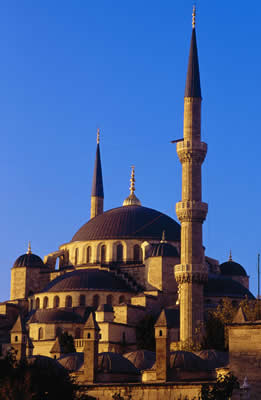
Winter Symposium
The Dispute Board Federation is holding its 2009 Winter Symposium in Istanbul Turkey the 12th through the 15th of November 2009.
This promises to be an exceptional event with leaders in International Finance, Insurance, Construction, Alternative Dispute Resolution , and Dispute Boards come together for lively debate and discussions on the future of Dispute Boards, their integration with Alternative Dispute Resolution such as Mediation and the re-building of the infrastructure in courties that are emerging from recent conflict.
The Symposium is divided into working sessions, discussion groups and lectures all on these subjects with the presentation of papers on these subjects along with the presentation of a prize for the most insightful and thought provoking paper.
In addition to the working sessions there will be a gala dinner for all participants and the opportunity for networking amongst the approximately 200 planned participants.
Please save the dates and note the time restrictions for the submissions of papers.
Registration for this Symposium will open 1 August 2009 for more information or to be put on the waiting list for this Symposium please contact Jonathan Varoqui email: j.varoqui@dbfederation.org.
| |
|
|
|
|
Featured Events
Future combined
FIDIC -DBF
and
International Finance Corporation
related programmes
and events include:
12 - 13 May 2009
Sarajevo
DAB Training
9-10 June 2009
For a full listing of programmes
and
events, brochures
and more information
and/or to register please go to:
www.dbfederation.org
|
 |
DISPUTE BOARDS
AND
BUSINESS IN VIETNAM
The DBF in conjunction with
FIDIC
are pleased to present a very special programme in Saigon on
12-13 May 2009
In addition to the intensive DAB programme, those who attend will meet with country leaders of Viet Nam as well as IFC officials for a discussion of current issues dealing with dispute boards and their use in infrastructure
development as well as in related industrial and related applications.
This two day programme covers all aspects of Dispute Boards and their proper use and satisfies all of the requirements of FIDIC's Module 3. Additionally The course also provides the participants with a hands-on approach to learning this vital subject.
Taught by leaders in the field of Dispute Boards this programme provides each participant with a thorough grounding in dispute boards, their various differences and operation and their use in the all common forms of contract particularly the FIDIC Conditions of Contract. Most importantly the course is taught from the perspective of those who are construction professionals.
The programme is of benefit to to all government and planning officials, regional and local procurement officers, consultants and consulting engineers, as well as all contractors, quantity surveyors, architects, legal advisors and all involved with the implementation and management of works contracts.
|
|
Herbert Wilson of theDBF and Lada Busevac of the International Finance Corporation announced the signing of a Memorandum of Understanding regarding the IFC's Alternative Dispute Resolution Program.
This Program is focused primarily on the development of commercial mediation in the region, and is part of IFC's ongoing, donor-supported, judicial reform effort in the region. The
countries of focus for this phase include Albania, Bosnia and Herzegovina, Former Yugoslav Republic of Macedonia, Montenegro and Serbia.
The DBF and IFC will cooperate in the development and use of the alternative methods of resolution of commercial construction disputes involving dispute boards and mediation in Bosnia and Herzegovina and Serbia within the ADR Program and will cooperate in organising training regarding the FIDIC rules of solving disputes.
This MoU has already led to the successful ADR Training Programme held in Sarajevo at the start of this month.
| |