|
IN THIS ISSUE
Long Gives Presentation
New Facebook Page Tips for Medical Imaging
|
|
What's New at
Guardian Nurses
Long Gives Presentation to Lancaster Audience
Thanks to an invite from one of our broker clients, Betty Long presented "Your One--Two Punch: Wellness and Healthcare Advocacy" to a breakfast meeting of HR managers and business executives this week. The demand for cost-effective solutions to rising healthcare costs is growing. Healthcare advocacy can be an easy and immediate 'return on investment' for employers. |
|
Join Us on Facebook
Lest we be the last in our office complex---Guardian Nurses has a Facebook page and we invite you to "follow" us. All you have to do is sign into Facebook and search for Guardian Nurses. Our page is updated 2--3 times a week with pertinent information for patients and other general healthcare news. |
Lighter Notes
A 54 year old woman had a heart attack and was taken to the local hospital.
While on the operating table she had a near death experience. Seeing God she asked "Is my time up?"
God said, "No, you have another 33 years, 2 months and 8 days to live."
Upon recovery, the woman decided to stay in the hospital and have a
face-lift, liposuction, breast implants and a tummy tuck.
She even had someone come in and change her hair color and brighten her teeth! Since she had so much more time to live, she figured she might as well make the most of it.
After her last surgery, she was released from the hospital. While crossing the street, she was killed by an ambulance.
Arriving in front of God, she demanded, "I thought you said I had another 33 years? Why didn't you pull me from the path of the ambulance?"
God replied: "Oh, no! I'm so sorry, I didn't recognize you."
|
|
|
Last week I was walking through a hallway of a local hospital when a patient approached me and said, "Excuse me, I must be lost. I thought I followed directions to the Xray department, but these signs say "Medical Imaging." We laughed when I told her that she was in the right place.
The department names have changed because there are so many more ways to look at your body than with "just" xrays. Medical imaging typically falls into four groups: xrays, MRIs, CT scans, and ultrasound studies.
Perhaps more than any other testing, the professional capturing the images has a lot more leeway than you might think. We've included some "tips" for the next time you might need to visit the "Medical Imaging" department.
 Less than 34 days 'til Spring!!!! Less than 34 days 'til Spring!!!!
Betty Long
Betty Long, RN, MHA, President
Guardian Nurses Healthcare Advocates
|
|
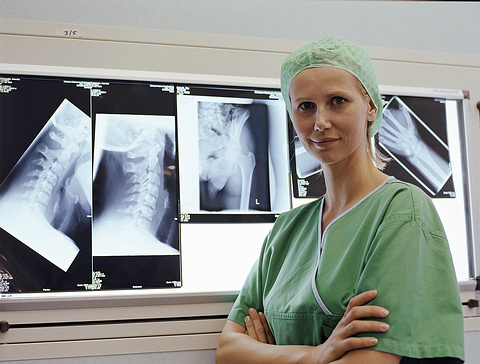
A Dozen Tips About Medical Imaging
Preparing for medical imaging:
- Leave jewelry home. Jewelry interferes with most imaging tests so why take a chance yours might get lost? Take off your jewelry in the car and lock it in your glove compartment.
- Ask for written instructions if you need to do something before the test. It's not a good idea to trust your memory with instructions given over the phone. If you miss a critical step, you may have to reschedule. Instructions can be mailed, faxed, or emailed. Some places even have their instructions on a website.
- Ask how long the test will take when you schedule. Many tests require that you are injected with or drink a liquid called contrast which will highlight certain structures in your body. You may need to have some images taken, then wait and have more taken an hour later. Don't assume that everything can be done as quickly as a chest xray.
- If your study requires a bowel prep and/or contrast, it will take a while and will likely wear you out. Plan on taking it easy the rest of the day.
- Avoid wearing any clothing with metal because it will show up on the image. It's much easier to ask all patients to change into a gown so the technologist doesn't have to worry about a hidden metal bra hook, for example. But if you're going to be a while, or have arthritis, or are sensitive to cold, there is no law that says you must change.
- A fashion 'do' for imaging includes:
- Women should avoid metal hooks or underwire bra. Wear an elastic sports bra or none at all.
- Wear regular underpants. Mean, that means no boxers with snaps.
- For below the waist, wear pants with an elastic or drawstring (like sweatpants). Avoid pants with zippers or clips at the waist.
- White cotton socks and a sweatshirt can keep you warmer while you're chilling in the room.
- Speak up! Medical imaging departments are cold because the machines often generate a lot of heat. If you're lying on the rock hard metal table in a thin gown, you'll freeze. Most tests can be done through blankets so make sure you ask for one (or two) if you're chilly.
- Ask the technologist for ideas if the contrast or barium tastes nasty. You need to figure out a way to swallow the minimum amount--without vomiting--so you don't have to repeat the test. If you can get the liquid cold, the taste won't be as strong. Try asking for a cup with a lid and a straw so you don't have to look at it. The straw will help you direct the liquid past your taste buds.
- Keep yourself distracted. If you have the slightest anxiety about the walls closing in, ask to schedule at an open MRI. Bring your favorite CD. Today, all MRI machines have sound systems and headphones (or speakers). Music can be very relaxing in a strange place.
- If you are having a long procedure--not in an MRI--bring your own headphones and music/book so you can mentally be someplace else.
- If you are diabetic and had to fast for a study, be sure to carry your own sugar in case your blood sugar drops unexpectedly. The technologist will recognize the signs but a ready source of sugar is not necessarily in every room.
- Getting ready to leave:
- If you've had to drink anything for a test, take a look in the mirror before you leave. Your lips may be chalky white!
- Drink plenty of fluids for 24 hours after any medical imaging study that required contrast (drank or injected) to flush the contrast through your kidneys.
- Before you leave the department, check with the technologist to see if there are any post-test special instructions you need to follow at home.
- If you're anxious about the results, ask if you can review the study with a radiologist before you leave the department.
|
|
|



