Message
In a writing workshop I once took, the literary novelist Ethan Canin told us that reading is "about connecting with a sensibility." This resonated with me as a writer because I know that when something I read compels me, it's because I feel like I'm connecting to a certain world view in a piece of writing, a specific take on a timeless theme, a fresh, original voice. A teacher I had in college used to like to say "there are no new plots, just new characters" - and I'd like to take that one step further. New sensibilities. Lucky for all of us writers - each of our sensibilities is truly individual. No one else in the wide world sees the way we see - through our unique experience, through our distinctive eyes.
And that's the heart of point of view.
Not just who's telling the story or how it's being told but the entire world view that an author translates through a piece of writing to a reader.
Different readers connect to different point of views, to different sensibilities. It's why I can read something and think "Wow, this engages me. I'm hooked." And the guy sitting next to me in the café can tell me he couldn't get through it. It's two sensibilities connecting - or not.
So that's why I think Point of View is essential as a writer and a reader.
|
|
 The Lost Girl by Sangu Mandanna (Balzer + Bray) The Lost Girl by Sangu Mandanna (Balzer + Bray)
In this lush retelling of the Frankenstein concept, Mandanna tells the story of Eva, an echo who has been woven as a back-up to a human counterpart. She has been raised only to replace Amarra, a far away girl she's never met, just in case something happens to her. She isn't meant to have a life of her own; she's a replica, a copy - an echo. In this odd sort of prison, Eva must wrestle with her place in the world, with her own feelings of self, of love, of purpose - what could be more human that that? Mandanna's writing is rich and detailed, with an electrical emotional undercurrent. Using the relevant topic of bioethics as her backdrop, Mandanna artfully explores not only what it means to be human on a universal level, but also what it means to have the courage to be one's self.
|
|
 Writing Exercise Writing Exercise
I loved the world Mandanna built behind Eva, the idea of the weavers, of her life as an "echo." Take this word, echo, and build a new definition of it through a character you create, a poem you write, or a story that features an "echo" in a fresh way.
|
 Outside Reading School Project Outside Reading School Project
This fall, I'm teaching a unit called Legend, Fairytale, Myth and Monster where my students are exploring the driving question: As humans, what story do we continue to tell over and over throughout time? The Lost Girl is one of these retellings, a book that explores this idea of "monster" in a thoroughly fresh way. The Lost Girl makes a wonderful companion book to the study of Frankenstein. Encourage students to look for the connection between Eva and Frankenstein's monster. Have students create a poster, a Venn Diagram, or some other visual way of showcasing the way these two books overlap.
|
 Instructions for a Broken Heart Instructions for a Broken Heart
by Kim Culbertson
IFABH was named a Booklist Online Top Ten Romance Fiction for Youth: 2011: check it out!
IFABH won the 2012 Northern California Book Award for YA Fiction: check it out
I appreciate any other great reviews you'd like to add to Amazon, goodreads, etc.
And I thank you in advance - it means a lot! "Culbertson balances the story between teen angst and a nice Italian travelogue. The author has a flair for evocative descriptions. . . The major strength here is in the literary quality of the writing, although teens may be more interested in the characters' relationship." -- Kirkus Reviews Sourcebooks Fire (May 1, 2011) Also, check out the official trailer!! 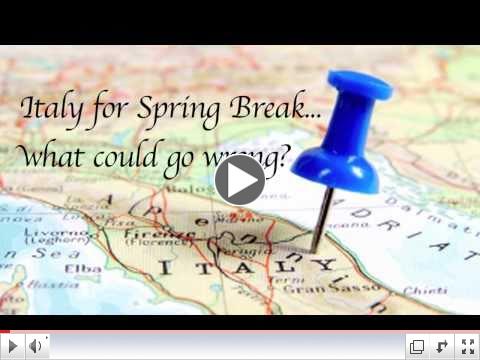 | | "Instructions for a Broken Heart" by Kim Culbertson - *Official Trailer* |
|
 Need a gift? Need a gift?
Inspire the special people in your life to keep a song journal chronicling the soundtrack of their lives.
Bundle any combination of the following:
a Writing Journal, a CD, and/or an iPod
with Songs for a Teenage Nomad for a Teenage Nomad
|
|
|



