|
Contact DCD
919.662.4499
800.859.0829
(in-state only)
fax: 919.661.4845
webmasterdcd@dhhs.nc.gov
mailing address:
2201 Mail Service Center
Raleigh, NC 27699-2201
physical address:
319 Chapanoke Road
Raleigh, NC 27603 |
|

If you didn't receive this directly from us, please give us your email address to receive this newsletter and other updates from the Division. |
|
Welcome to the very first issue of an electronic newsletter from the North Carolina Division of Child Development (DCD). We're excited about this new way to stay in touch with child care providers and agency partners and to share news and information important to quality child care. We hope this will connect us to the wide community of people working with and on behalf of children in early education and school age care.
Look for this newsletter in your email box about every three months. We'll also post it on our website, with a place for folks to subscribe if they aren't already on the DCD emailing list. Help us spread the word by sharing this newsletter with your colleagues.
As you read this, please feel free to send us your ideas and feedback. What other types of information would you like to see? We want this to meet YOUR needs. Contact us at webmasterdcd@dhhs.nc.gov and put The Compass in the subject line.
Thanks to all of you for the work you do everyday on behalf of the children and families in North Carolina.
All the best,

Deborah Cassidy, PhD.
Director of the Division of Child Development
* * * * * * * * * * * * * * * * * * * * * * * * * * * * |
|
Early Education and Child Care MATTERS

Do you ever wonder if anyone values what you do every day with young children? The business community does. They rely on the vital service you provide to children, to their families and to society.
Because they understand, the US Chamber of Commerce launched an Early Childhood Education Initiative and published a report called Why Business Should Support Early Childhood Education. Page one of the report says "Achieving a world-class [education] system . . . begins with high-quality early learning opportunities for children from birth to age five."
In Starting Smart and Finishing Strong from the Institute for a Competitive Workforce, here's a quote to make you feel that what you do truly matters: "Investing in the earliest years of life is the first step in preparing a workforce that can meet the demands of the 21st century."
Yes, you ARE valued for the very important work you do!
|
Help Shape Positive Change at
the Division of Child Development
At the Division we have been exploring ideas about cultural diversity and how to be an agency that excels at valuing and responding to the strengths, expertise and needs of everyone. Now we need your help with these ideas. A survey is being sent to your email, asking you to respond to some questions from your personal experience with the Division. How do you see us, as an organization? Answering this survey is your chance to help shape positive change at the Division. All responses will be entirely anonymous.
Please complete the survey when you receive it.
We want the results to truly represent the opinions of
our staff, our customers and our partners. That can only happen if we hear from YOU! Division of Child Development staff - and the families, children and child care providers that we serve - reflect a wide range of cultures. Help us take a good look at ourselves, so that together we are able to provide the highest quality service to everyone we serve.
|
|
Highlighting Healthy Child Care Standards
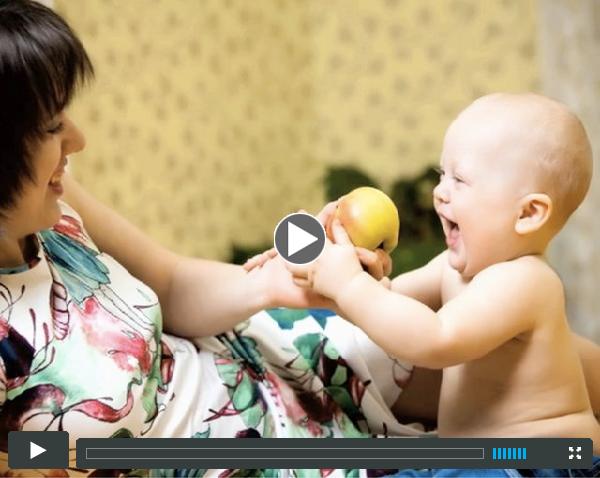 | | InBrief: The Foundations of Lifelong Health |
Healthy child development is a key ingredient for a productive society and a prosperous future. This video explains how the foundations of lifelong health are built in early childhood, when many young children spend a lot of time in child care.
The Healthy Child Care America website focuses on one standard each month from Caring for Our Children. It collects stories, ideas, and strategies to help child care providers and child care health consultants successfully meet the "Standard of the Month".
In March 2011 the Standard of the Month was Playing Outdoors. This explains the "whys" and some of the "how-tos" for outdoor activity and learning. It includes a section called Learn From Your Peers that shares practical ideas for outdoor play from other caregivers, a pediatrician, and child care health consultants. These can help you put into practice Child Care Rule requirements for infants and toddlers to spend a minimum of 30 minutes outdoors daily and older children at least an hour.
Visit the "Standard of the Month" Web page to learn more about the standard, subscribe to receive it in your email each month, and read what others are saying about it.
|
|
Crib Safety Updates
IMPORTANT UPDATE: Strong New Crib Safety Standards to Ensure Safe Sleep for Babies and Toddlers was featured on our What's New page in December 2010 . Here is additional
information to help you meet these standards.
The Consumer Product Safety Commission (CPSC) has approved new mandatory federal standards for safer cribs in response to more than 30 infant and toddler deaths. These new standards
- ban the manufacture and sale of drop-side cribs,
- require stronger mattress supports and crib slats,
- require crib hardware to be more durable, and
- require more rigorous safety testing.
Any crib provided by a licensed child care center or family child care home will be expected to be compliant with this law by December 28, 2012. This Child Care Provider's Guide to New Crib Standards just issued by CPSC outlines what you should know and what you should do.
Effective June 28, 2011, all cribs sold must meet the new federal standards. Some compliant cribs came on the market as early as July 2010. However, you will not be able to tell if the crib is compliant by looking at the crib. You must ask the retail store or the manufacturer to show a Certificate of Compliance as proof that the crib meets the standards. The new regulations also forbid the sale or donation of non-compliant cribs. CPSC recommends taking the crib apart before discarding it.
This may become quite expensive, but it is critical that you have the most-up-to-date equipment for children in your care. Begin planning now so you can make purchases in time to meet the requirement that the cribs you use meet the new standards NO LATER than December 28, 2012.
Visit the CPSC crib information center to learn more about crib safety and safe sleep environments for baby.
|
 What's New?
Are you familiar with this feature on our website?
Every month we post new items of interest and importance to the child care community. You might want to bookmark this page so you can check it often.
Here are some recent items from What's New:
Important Information for Subsidized Child Care Providers: North Carolina will soon begin using SEEK - Subsidized Early Education for Kids. SEEK is a new attendance reporting and payment delivery system for parents and child care providers. A new tab for SEEK will soon be on our website with information for parents, child care providers, and counties. Check often for updates.
A packet of information on preparing for SEEK has been mailed to all providers of subsidized child care in the state. View all the documents in the packet here.
SEEK Awareness Sessions for Providers will be held statewide to introduce subsidized child care providers to SEEK. This schedule will help you find a convenient time and location to attend and learn more about how the program will work.
SEEK Letter to Parents from DCD Director. This letter was mailed April 15 to the parents of children enrolled in the Subsidized Child Care System, to tell them about the SEEK system.
SEEK Flyer for Providers. This flyer was distributed in February 2011 to tell subsidized child care providers about how SEEK will work and how to get ready for it.
SEEK Letter to Counties and Local Purchasing Agencies. This memo was sent in January to introduce the upcoming SEEK system.
Child Care Workforce: New Information about Procedures for Workforce Education Evaluations and Early Educator Certification. Please open, print, and share these new documents with others working in child care:
Child Care Providers: Be Smart Consumers of Training.
As a child care provider, you have to meet state requirements for in-service training each year. If you have received your Early Educator Certification, you also need continuing education that counts for your certificate renewal. Because you spend time and money to do this, here are some tips and links to be sure that the training you take meets those requirements.
Child Care Operators: You have a new tool to protect the children in your care. As an employer you can now access the Responsible Individuals List (RIL) to find out if a current or prospective employee has been identified as a responsible individual in a substantiated case of abuse or serious neglect. Read more . . .
|
|
Dear DCD
Q: Do I have to participate in Early Educator Certification (EEC)?
A: Yes. If you are working in licensed child care, you will have to apply for Early Educator Certification. In July 2010, the North Carolina General Assembly made a change to the law to require education certification for all staff in child care programs. Certification is based on the education you have achieved beyond high school. Your education will be reviewed and you will be awarded a certification level based on a standardized scale.
Depending on when you were hired into your current job, you may not have to become certified immediately. Here are guidelines:
- Anyone hired on or after October 1, 2010 must have their education certified by the North Carolina Institute for Child Development Professionals (the Institute) within 60 days of hire.
- Staff working in a program before October 1, 2010 will have until July 1, 2012 to get their education certified.
- All child care administrators, regardless of their hiring date, have until July 1, 2012 to become certified.
Visit the website of the Institute http://ncicdp.org/ to learn more.
Do YOU have questions you'd like us to answer? We'd like to use them in future newsletters. Please submit your question to webmasterdcd@dhhs.nc.gov and put Dear DCD in the subject line.
|
DHHS Excels Corner
Have you heard of Excels? Excels is a project to make the North Carolina Department of Health and Human Services (DHHS) and all of its divisions - including the Division of Child Development - the best they can be in serving the residents of our state. DHHS Values are at the heart of Excels. Here are those values and what they mean for the Division of Child Development:
- Customer-focused - you are at the center of what we do.
- Anticipatory - your feedback guides our thinking, planning, policies and practices.
- Collaborative - we value partnerships.
- Transparent - we share information, planning and decision-making processes and we communicate openly with customers and partners.
- Results-oriented - we emphasize accountability and measure our work by the highest standards.
We hope this newsletter demonstrates some of these Excels values to you. We chose the content with your interests in mind. We look forward to hearing from you to give us a better idea about the news you want and the questions you have. We want you to become more familiar with the Division and to feel that we are truly partners working together for children, families, and for a thriving community of child care providers and partners.
In future issues of the newsletter we will describe specific examples of how the Division of Child Development Excels in these values. |
A Parting Thought
Do you ever question the value of your efforts for children? Nothing could be
more important.
"For these are all our children. We will all profit by
or pay for what they become."
James Baldwin (1924-1987) |
|
|
|
|



