|
|
|
Dear Parenting Digest Subscriber:
We hope you enjoyed your holidays with your friends and family and we would like to wish you a happy & healthy New Year!
Please check out our page on Facebook. Let us know what topics you would like to see covered in Parenting Digest or on the Early Intervention Support website. You can now also share this newsletter with friends via  and/or and/or  . .
Many parents become concerned if their child is not walking by their first birthday. But, do they need to be worried? Read our article on walking to find out and learn some tips to help your baby take his first independent steps.
Most young children drool when they are teething, but drooling past the age of teething may indicate a problem that can affect other areas of a child's development or health. Our article on decreasing drooling in young children provides some insight into this frequent concern.
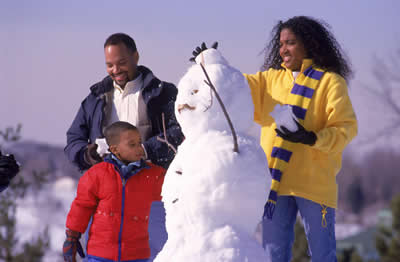
In Pittsburgh it's been cold since late November, but there is still plenty of winter left to come. Why not make a snowy day hand print tree with your children using our January craft idea?
Remember, if you can't find an answer on our website or if you have a specific question or concern about your child, you can always contact us at Ask A TherapistEarly Intervention Support is a place for families who are facing any challenge pertaining to their child's growth and development. It is a place where you can come to find answers and practical suggestions from licensed therapists on how to work on a variety of issues. Whether you are a parent, grandparent or therapist of a child with a disability,challenging behavior or other developmental issue-childhood is short, it should be savored and enjoyed! 
|
|
FEATURED ARTICLE:
Walking-What's Typical, What's Not?
| 
All parents await their baby's first steps. This magical moment is usually reported to occur somewhere around a child's first birthday, and when it doesn't, many parents worry that something may be wrong with their child. While it is true that 12 months may be the average age for walking, babies who don't walk by age 12 months are not necessarily showing any sort of gross motor or developmental delay.
As therapists we typically tell parents that children may walk independently anytime between 9 months and 16 months and still be considered "typically developing". Often a physical therapist will want to take a look at a child if they are 15-16 months old and not yet walking independently to determine if there is a reason the child has not taken independent steps and may perhaps benefit from therapy to help him along.
Walking is not simply a matter of just balance, muscle strength and coordination. Muscle tone as well as a child's temperament may also play a role. Children who are active and impulsive may walk early and children who are laid back and easy going may walk late, but that is not always the case. Children who were early walkers may be more accident prone and later walkers may be more cautious, but again this isn't true across the board. All children are different. Children with high or low muscle tone may have more difficulty with walking and gross motor skills in general.
Once children do begin to walk many parents become concerned about kids whose feet turn outward or inward. Typically this is not a concern and a child's gait will straighten itself out by around age 3. If your child continues to trip and fall due to feet turning inward/outward then you may wish to consult a physical therapist.
Young children do not develop much of an arch and are relatively flat footed until about the age of 3, which is another reason for kids turning toes inward to help them distribute their weight and balance themselves while walking.
Some children walk on their tip toes (especially kids who spent a lot of time in exersaucers, walkers and jumpers), but again, this is typically not a concern unless a child's physician or therapist detects tight heel cords and the child cannot physically put his feet down flat or it causes pain.
When young children begin to walk they need what is called a "wide base of support" to help them balance, thus they will walk with arms out and legs apart and feet may be turned inward or outward.
Click HERE to continue to read some great tips to encourage walking with your toddler
|
Decreasing Drooling in Young Children
|

Drooling is very common for babies and toddlers, especially during teething. When young children continue to drool excessively past the age of teething it is considered atypical. Some older children may continue to drool due to low muscle tone in the mouth, difficulty with swallowing, poor posture or a diagnosis such as cerebral palsy which may make controlling oral motor movements more difficult. However, if your healthy child continues to drool past the age of teething it is a good idea to see a dentist, your pediatrician and even a speech therapist in order to learn some techniques to help your child.
Check for Dental and/or Medical Issues First
Be sure your child does not have dental problems that may contribute to drooling (poor teeth or jaw alignment or cavities). Teach good teeth brushing habits early in life and make sure your child rinses his mouth after brushing. Allow your child to use a vibrating or electric toothbrush for extra oral stimulation.
See your pediatrician to be sure your child does not have any chronic upper respiratory infections, allergies or enlarged tonsils/adenoids that could contribute to drooling.
When seeking speech therapy your therapist may work on the following skills with you and your child, all of which can be practiced at home to help lessen drooling: -
Using a Nuk brush, which is a soft plastic brush with nubs on it used for oral motor stimulation and massage.
-
Brushing teeth using a vibrating toothbrush and learning to rinse the mouth.
-
Using vibrating teething and oral motor toys to stimulate and "wake up" the mouth, tongue and lips.
-
Determining whether your child has difficulty with swallowing and teaching correct swallowing
-
Using a straw and/or an open cup to drink liquids instead of a spouted sipper cup to promote more mature oral motor movements
-
Teaching the difference between the concepts of "wet" and "dry" since many young children who have drooled chronically are not aware of the wet sensation of the drool on their face/chin.
-
Using mirrors and verbal/tactile prompts to allow the child to see and feel the drool on his face and then wipe the drool himself. As well as prompts for posture and positioning.
-
Playing games such as blowing cotton balls across a table, sucking from a straw, blowing bubbles, blowing whistles, blowing up balloons, making kissing or fish faces in the mirror, etc.
-
Using toweling or facial massage before meals and before and during therapy to "wake up" the mouth.
-
Eating a variety of textures, tastes and temperatures of foods to improve awareness and sensation inside the mouth.
Drooling into the preschool years becomes embarrassing for young children (especially if parents continue to wear a bib on them) and can also cause skin to break down on the cheeks, lips, chin and neck and cause bad breath. Children who continue to drool after about age 18 months are often more likely to also have feeding (gagging, aspirating)issues, swallowing problems, speech problems and/or congestion. Treatment of drooling with young children via a therapist can be very successful. For more severe cases of drooling that do not respond to therapy there are medical treatments and surgery options as well. **********************************************************************
Do you have concerns about your child's eating or sensory skills? If so and you are in the greater Pittsburgh, PA area visit the link below or call:
Thrive Place™ Child Development Center
GOOD THINGS HAPPEN HERE!
Thrive Place, 4070 Beechwood Blvd., Unit One Pittsburgh, PA 15217 412-521-1067
|
|
|
"A New Year's resolution is something that goes in one year and out the other." ~Author Unknown
From The Team At Early Intervention Support
|
|
|