Not On Our Mailing List?
|
 |
Developmental Activity
of the Month
Bird Seed Snow Angel
|

Since the East Coast still has plenty of snow, we're continuing with last month's theme of feeding the birds this winter by showing you how to make a bird seed snow angel in your backyard.
What you'll need:
- Several types of bird seed, such as thistle, sunflower, corn, safflower
- Cups
- Pine boughs
How to make it:
1. This angel is easiest made by two children or an adult and child: One person lies down to make a
snow angel while the other person stands by to help the maker get up
without messing up the imprint.
2. After the imprint is formed, pour cups of birdseed into the angel,
filling the head and body with bands of variously colored seed.
3. For a finishing touch, add pine boughs for the angel's spreading wings.
Tips:
Making snow angels is a wonderful motor activity for kids that involves their whole body and with the added sensation of the cold and the touch of the bird seed and pine bows, it becomes a sensory activity as well!
|
|
|
OUR SPONSORS
|

|
|
|

|
Dear Parenting Digest Subscriber:
Hopefully by our next issue we'll be well on our way to Spring and warmer weather, but for those of you who are still stuck in the snow why not grab a cup of hot chocolate and take a moment to find out how to support self-regulatory skills in young children by reading our feature article. Also in this issue we explore why recess is not only good for exercise, but for developing many important social skills in elementary aged children as well. Our craft this month is perfect for the snow, helps out the birds and is fun for kids of any age.
Remember you can always find great parenting tips at Early Intervention Support regarding your child's attention span or general development. If you can't find an answer on our website or if you have a specific question or concern about your child, you can always contact us at Ask A Therapist.
NEW!!! Just opened this February in Pittsburgh, Pennsylvania is Thrive Place
Child Development Center: A Unique Intensive Outpatient Feeding Center.
For more information or to set up an evaluation for your child please call
412-521-1067.
Early Intervention Support is a place for families who are facing any challenge
pertaining to their child's growth and development. It is a place where you can
come to find answers and practical suggestions from licensed therapists on how
to work on a variety of issues. Whether you are a parent, grandparent or
therapist of a child with a disability, challenging behavior or other
developmental issue-childhood is short, it should be savored and enjoyed!
|
|
FEATURED ARTICLE:
Self-Regulation in Toddlers and Preschoolers
|

The term "self-regulation" is
used to refer to a range of characteristics and abilities. A child
with self-regulatory skills is able to focus his attention, control
his emotions and manage his thinking, behavior and feelings. Adults
are very good at multitasking, but children are not. An adult can be
cooking dinner, talking on the phone and thinking about what to make
for dessert all at the same time, whereas a child may go upstairs
intending to brush his teeth and get distracted as soon as he sees a
favorite toy at the top of the stairs. An adult can receive a present
they dislike but still smile and thank the gift bearer graciously. A
child will receive a gift they don't like and state "I don't want
this!" and start to cry. Young children tend to live "in the
moment" and are ruled by their impulses and their immediate desires
or feelings, while adults can filter out distractions, exercise
control and decide what is an "appropriate" response before we
speak or act.
More than just behaving
While self-regulatory skills in young
children have always been a concern for teachers and parents more
current research on the subject has shown that self-regulation is
related to more than just parenting skills and the ability to learn
to follow rules or simply "behave". Self-regulation skills take a
long time to develop and are not fully in place until early
adulthood. Therefore we need to have realistic expectations when it
comes to working with the toddler and preschool population. Newer
research has shown that self-regulation is directly related to brain
maturation. Specific areas of the brain including the cingulate
cortex and several regions within the prefrontal cortex are involved
in development of self-regulation. Some recent research has also
shown that self-regulation is ranked as the most important
characteristic necessary for school readiness by kindergarten
teachers and that there is evidence that early self-regulation levels
have a stronger association with school readiness than IQ or
academic readiness.
The key cognitive components related to
self-regulation are collectively referred to as "executive
functions" and include inhibition, working memory and cognitive
flexibility. A child's own temperament also has a hand in
self-regulation, meaning some children just have more innate
self-control and are naturally more calm, while others are more high
strung and difficult to soothe.
Predictable routines and structure are helpful
Children do develop better
self-regulatory skills as they get older, however, some children
require more support in these coping skills than others. Children who
grow up in loving, stable environments with predictable routines and
structure are better at developing these skills than children who
grow up in disadvantaged environments where they lack stability and
routines and where their families are exposed to high levels of
stress. In working with special needs children we have also noted
that children who were born prematurely or who were born drug exposed
also show more difficulty with self-regulation. Children who have
difficulty with self-regulation also tend to have trouble with
learning and academics and are at risk for problems with aggression,
anti-social behavior and depression. It is important for teachers
and caregivers to be aware of this so that they can support these
disadvantaged children in the toddler and preschool years.
How can we help support a toddler or preschooler's self-regulatory skills?
|
Why Recess is Important for Young Children
|
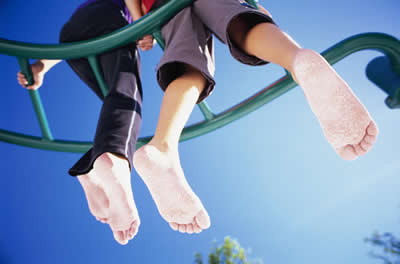
In the past ten years there has been a
trend in many elementary schools toward banning recess. Many new
elementary schools are even being built without playgrounds and one
school superintendent was quoted to say "We are intent on
improving academic performance. You don't do that by having kids
hanging on the monkey bars." In 2006 it was said that nearly 40%
of elementary schools no longer offered recess to students. Most
teachers these days have been under pressure to push academics and
raise standardized test scores, thus eliminating activities such as
gym and recess seemed like an easy way to increase the amount of time
spent learning in the classroom. But, is this strategy working? Many
child development professionals beg to differ.
Recess Develops Social Skills
Children, just as adults, need down
time and breaks during their "work" day in order to function to
the best of their ability. As adults we do not complete our work days
without taking several breaks and children should not be asked to do
so either. Remember the old adage "a child's work is his play"?
Recent studies have concluded that children who do not get recess
during the school day are much more restless in the classroom. But,
recess does a lot more than just alleviate the fidgits. Recess allows
children to develop important social skills with their peers in an
unstructured way outside the classroom. They learn cooperation,
teamwork, sharing and patience. They learn to resolve differences and
sort out friendships. Recess is more than just free play time, it can
build character and improve self esteem. Many children move from the
classroom straight to structured adult directed after school
activities such as sports or dance/music lessons and without recess
they never have the ability to develop these critical skills.
Recess Can Lead to Higher Test Scores
Recess helps kids burn off extra energy
and actually helps rather than hurts their classroom performance. In
2005 the California Department of Education conducted a study that
showed that children who are physically active score higher on the
Stanford Achievement Test. So if this is really true, then schools
that are eliminating recess in order to increase class time and raise
standardized test scores may actually be doing more harm than good.
Recess can also aid in giving kids who
are "couch potatoes" due to sitting in front of video games, tv
or the computer at home, the exercise time they need each day in
order to ward off childhood obesity.
Child development experts seem to agree
that quantity of classroom time is not more important than quality of
classroom time, so instead of cutting recess to allow for an extra
half hour in class, the focus should shift to improving the
curriculum and quality of lessons taught.
Think of all the great things YOU
learned as a child on the playground and what your child might be
missing if he is not playing dodge ball or hanging on the monkey
bars!
|
|
|
"If you carry your childhood with you, you never become older."
~Tom Stoppard
From The Team At Early Intervention Support
|
|
|



