Not On Our Mailing List?
|
 |
Developmental Activity
of the Month
Pine Cone Bird Feeder
|
Children of any age and all abilities can help with this simple winter craft.
What you'll need:
- 1 or more large pine cones
- 1/2 cup vegetable shortening, lard or suet
- 2 1/2 cups uncooked oats, cornmeal, bird seed, dried fruit
- string
How to make it:
1. Mix the vegetable shortening with the uncooked oats and/or cornmeal until well blended
2. Cover the pine cone with the above mixture
3. Roll the pine cone in the birdseed and add pieces of dried fruit if desired
Tips:
This is certainly a sensory craft due to the stickiness of the vegetable shortening mixture, as well as the added texture of feeling the pine cones and rolling them in birdseed. Take this opportunity to discuss why we need to help feed the birds in winter and talk about how bird food differs from human food, are there foods we have in common?
|
|
|
OUR SPONSORS
|

|
|
|
|
Dear Parenting Digest Subscriber:
HAPPY NEW YEAR!!!
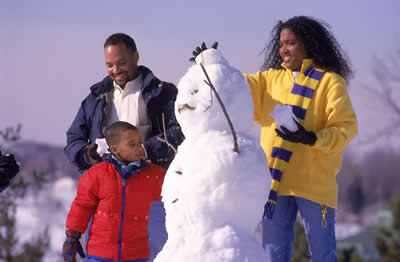
We sure have endured some brutally cold temperatures and a lot of snow already this season and we are only one month into the winter season! The American Academy of Pediatrics offers many tips to keep your child safe and warm during this chilly winter season:
What to Wear
Dress
infants and children warmly for outdoor activities. Several thin
layers will keep them dry and warm. Clothing for children should
consist of thermal long johns, turtlenecks, one or two shirts, pants,
sweater, coat, warm socks, boots, gloves or mittens, and a hat.
The
rule of thumb for older babies and young children is to dress them in
one more layer of clothing than an adult would wear in the same
conditions.
Blankets,
quilts, pillows, sheepskins and other loose bedding may contribute to
Sudden Infant Death Syndrome (SIDS) and should be kept out of an
infant's sleeping environment. Sleep clothing like one-piece sleepers
is preferred.
If
a blanket must be used to keep a sleeping infant warm, it should be
tucked in around the crib mattress, reaching only as far as your baby's
chest, so the infant's face is less likely to become covered by bedding.
To read more Winter Safety Tips from the AAP Click HERE!
NEW!!! Opening this February in Pittsburgh, Pennsylvania is Thrive Place
Child Development Center: A Unique Intensive Outpatient Feeding Center.
For more information or to set up an evaluation for your child please call
412-521-1067.
Early Intervention Support is a place for families who are facing any challenge
pertaining to their child's growth and development. It is a place where you can
come to find answers and practical suggestions from licensed therapists on how
to work on a variety of issues. Whether you are a parent, grandparent or
therapist of a child with a disability, challenging behavior or other
developmental issue-childhood is short, it should be savored and enjoyed!
|
|
FEATURED ARTICLE: The Low Down on Sensory Processing Disorder
Sensory Integration Therapy can be Fun!
|

By Kristen Burke, OTR/L
Sensory processing disorder occurs when
a child experiences difficulty processing information from the five
senses: vision, auditory, touch, taste, and smell. In addition,
Sensory Processing Disorder can cause problems with a child's sense
of movement and/or the positional sense, called proprioception. The
child can sense the information normally, (for example, he or she can
hear), but the information is processed differently in the brain.
This can result in distress or confusion. This condition can
exist alone or it can exist with other neurological conditions, such
as autism, attention deficit disorders, dyslexia, dyspraxia,
Tourette's syndrome, multiple sclerosis, and others.
A child with sensory processing
disorder will benefit from a "sensory diet" (coined by OT
Patricia Wilbarger) which is a carefully designed, personalized
activity plan that provides the sensory input a person needs to stay
focused and organized throughout the day. Just as you may jiggle your
knee or chew gum to stay awake or soak in a hot tub to unwind,
children need to engage in stabilizing, focusing activities too.
Infants, young children, teens, and adults with mild to severe
sensory issues can all benefit from a personalized sensory diet.
(Biel & Peske)
Each child has a unique set of sensory
needs. Generally, a child whose nervous system is on "high
trigger/too wired" needs more calming input, while the child who is
more "sluggish/too tired" needs more arousing input. A qualified
occupational therapist can use her advanced training and evaluation
skills to develop a good sensory diet for your child, but it's up
to you and your child to implement it throughout the course of the
day. (Biel & Peske)
It is helpful to understand the
different sensory systems when designing and implementing a sensory
diet. We are all familiar with the senses that involve taste, sight,
smell and sound, but our sensory system is constantly processing
information that allows us to be organized and understand where our
body is in space.
Tactile - the sense of touch
centered in the skin allows us to detect light touch, deep pressure,
texture, temperature, vibration, and pain.
Vestibular - the sense of
movement centered in the inner ear is essential for being able to
orient one's body in space. It automatically coordinates the
movements of the eyes, head and body.
Proprioception - sense of body
position comes from the muscles and joints. It allows the individual
to automatically adjust body position to carry out an action.
Sensory integration therapy is fun!
Click HERE to continue reading the types of equipment used in sensory therapy and how to make things fun!
|
Muscle Tone & How it Contributes to Feeding Difficulties
|

By Stephenie M. Gomez, MA CCC-SLP
A
child's sensory needs are a huge factor to consider when preparing
for mealtime, especially when your child has feeding difficulties.
It is important to evaluate your environment to determine if the
mealtime room is too warm or cold, too light or dark, too loud or
quiet. It is also important to monitor your child's positioning in
the chair to make certain that he is at a 90 degree angle, his feet
are grounded, and his body is stable and supported. Most
importantly, you have to be cautious of the food that you are
providing to your child; always considering the 3 T's (taste,
texture, and temperature).
Children with low muscle tone have very
different needs than children with high muscle tone when preparing
them for mealtime and these needs should be considered to limit
feeding difficulties.
There are many pre-feeding exercises that you
can do with your child to "warm up" and organize him for
feeding.
Low
muscle tone:
Environment:
Benefit from a cooler, brighter, and louder environment when
feeding. Music or TV may be on as background noise.
Positioning:
Always at a 90 degree angle with feet grounded. May need to use
pillows or towels to support his body from sliding and feet from
dangling.
Food:
Taste:
prefer high taste foods
Texture:
prefer
crunchy and pureed foods
Temperature:
prefer
cold food
Pre-feeding
exercises: hand tapping to cheeks and lips, "bug kisses"
(vibrator to lips), chew tube on back teeth, hand/body squeezes
High
muscle tone:
Environment:
Benefit from a warmer temperature, dimmer lighting, and a quiet room
without distraction.
Positioning:
Always at a 90 degree angle with feet grounded. May need to
position in a chair or on the floor with adult support for "relaxed"
position (keeping child's arms and legs from tight or spastic
reflexes during feeding)
Food:
Taste:
prefer low taste or bland/sweet foods
Texture:
prefer
liquids and soft foods
Temperature:
prefer
warm foods
Pre-feeding
exercises: vibration and/or massage to cheeks and lips, upper lip
stretches, light bounces/rocking
|
|
|
"One kind word can warm three winter months."
~Japanese Proverb
From The Team At Early Intervention Support
|
|
|



