Not On Our Mailing List?
|
 |
Developmental Activity
of the Month
Hand and Foot
Turkey Craft
|
This is a fun easy way to make a turkey and talk about body parts, colors, and number concepts.
What you'll need:
Brown, red, orange and yellow construction paper
Pencil
Scissors
Glue
Googly eyes (optional)
How to make it:
Trace around the child's feet (shoes can be on) using brown construction paper. These two pieces will be the turkey's body. Trace around the child's hands & fingers using red, orange, and yellow construction paper. These 6 pieces will be the turkey's feathers. Glue the two footprints together to make the turkey's body. Invert the footprints, so the heels make the head area. Cut out a round wattle
and an orange beak. Glue the wattle, beak, and googly eyes (or paper
eyes) to the turkey's head. Make two legs from paper and glue them to
the back of the body (or use pipe cleaners and tape them to the back). Glue the handprint "feathers" to the back of the turkey and you're done!
Tips:
You can let your child match the colored hand cut outs before gluing, encouraging him to put 2 of each color together. You can count the fingers on each hand or count how many hand prints you cut out. Discuss what other body parts you have two of (2 eyes, 2 ears, etc). You can talk about what sounds turkey's make.
|
|
|
OUR SPONSORS
|

|
|
|

|
Dear Parenting Digest Subscriber:
Thanksgiving
is November 26, a time to come together with family and friends
and reflect on the many blessings in our lives.
"Gratitude
unlocks the fullness of life. It turns what we have into enough, and
more. It turns denial into acceptance, chaos to order, confusion to
clarity. It can turn a meal into a feast, a house into a home, a
stranger into a friend. Gratitude makes sense of our past, brings
peace for today and creates a vision for tomorrow". ~Melody Beattie
Our November issue of Parenting Digest discusses the topic of Oral Fixation and how to determine if this is a typical phase that your child is going through or something that requires more attention. We also explore how very important a father's role is in his child's early development and how his way of playing with his children differs from the play of the mother.
Since Thanksgiving is all about food, why not check out our Tips to Establish Good Nutrition in Children
Early Intervention Support is a place for families who are facing any challenge
pertaining to their child's growth and development. It is a place where you can
come to find answers and practical suggestions from licensed therapists on how
to work on a variety of issues. Whether you are a parent, grandparent or
therapist of a child with a disability, challenging behavior or other
developmental issue-childhood is short, it should be savored and enjoyed!
|
|
FEATURED ARTICLE: Does Your Child Have An Oral Fixation?
|

By Tamara Guo, M. Ed.
In last month's newsletter we discussed
the pros and cons of pacifier use. We are continuing with a related
topic which deals with the question of why some children continue to
have an almost obsessive need to put things into their mouths often
past the age where it is deemed appropriate.
We refer to these kids as ones who have
an oral fixation. All babies go through an actual oral stage in
development which is quite appropriate-they suck on, bite, chew on
and sometimes even swallow things like toys, clothing, paper, pretty
much anything they find that they can get into their mouths. For
babies, sucking invokes pleasure and can calm a hungry baby or
comfort a teething baby. Mouthing and chewing for babies is also a
way for them to explore their environment. However, there are some
children who continue to engage in these oral type behaviors long
after infancy.
These children seem to have a need or
intense craving to put things into their mouths. They may bite their
nails, chew their skin on their hands, suck their fingers or thumb,
bite their clothing, chew on crayons, or suck on or chew toys and
other non-food items. They may also be children who have poor oral
motor skills, may drool excessively, may have poor eating skills
(under weight or over weight) and poor oral hygiene habits. They may
also be more socially immature and needy, and have more difficulty
with separation from their parents.
If this sounds like your child, it is
advised that you seek an evaluation from an occupational therapist or
speech therapist who can assess the reasons behind the need for this
oral behavior.
|
A Father's Role in his Child's Development
|
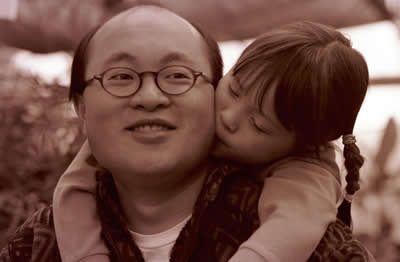
A recent article in the Journal of
Zero to Three (September 2009) entitled "Strenghtening Play Through
Father Involvement" by Kyle Pruett, MD yielded some interesting
findings regarding the role fathers assume when playing with their
young children. Dr. Pruett found that fathers spend more time engaged
in playtime with their children than mothers do, and that dad's
interactions are more focused on "rough-housing" type play.
Pruett's colleague Herzog (2001) found that father's had a tendency
toward more stimulating and active play than mothers and that dads
were less able to match a child's current mood and type of play and
were more likely to elicit more disruptive and exciting play with
their kids. Herzog suggests that this could be because fathers want
to build resilience in their children, as well as help them shift
gears and "roll with the punches".
Father's Bring Unique Strengths and Perspectives
Previous research by Dr. Pruett also
comes as no surprise, that children who had father involvement
(physical, emotional & behavorial involvement) were better at
overall coping, learning and citizenship. Dr. Pruett is correct in
theorizing that if such research exists to the importance of a
father's role in early learning, than why isn't more emphasis put on
a father's role in early care and education settings? Head Start and
Early Head Start have begun to implement some policies related to
paternal engagement and have started to look into ways to help
fathers become more frequently and positively engaged with their
young children. It is important to note that fathers bring unique
strengths and perspectives to caring for their child separate from
the mother. A UK research article suggests that instead of mothers
and fathers being thought of as opposites in caregiving, they should
be thought of as having complimentary caregiving styles.
There Are Differences in Parental Play Styles
"Do fathers and mothers have
different styles of play? Consider these two examples: a father picks
up his son, seven-month-old David, tosses him in the air, and throws
his head back so that he and David are face to face. As David giggles
and chortles, his father lowers him, shakes him, and tosses him up in
the air again. A mother sits her daughter, ten-month-old Lisa, on her
lap and pulls out her favorite toy, a green donkey that brays when
you squeeze it. Lisa smiles, and for the next few minutes her mother
moves the donkey in front of Lisa's eyes, makes it bray, and talks
and sings to her daughter. Lisa watches intently, smiles, and
occasionally reaches for her donkey. Are these examples merely
cultural stereotypes, or do mothers and fathers really play with
their babies in different ways? A series of studies confirm that
differences in parental play styles do exist." (Excerpt from the book Fatherhood, by Ross
Parke).
Toddlers Learn A Lot From Their Dad's
When fathers play with their toddlers,
they are not just entertaining them. They are providing a safe, yet
challenging way for toddlers to learn how to interact with the
world and with other people. Through rough-and-tumble play, fathers create
obstacles for their children and demand respect for limits and
boundaries. At the same time, they challenge their children and
encourage them to explore their own strength, their ability to do new
things, and their impact on the world around them. Toddlers who must
work out for themselves how to achieve goals-such as retrieving a
ball that is just out of reach in their father's hand or wrestling
their father to the ground-are practicing important problem-solving
skills. In fact, when fathers are good at playing with their young
children, these children score higher on tests of thinking and
problem-solving skills (Reasearch by Radin, 1994).
Many Early Intervention therapists deal
only with mothers when teaching therapy techniques and play skills,
but in families where a father is involved perhaps this will give us
food for thought on how to encourage dads to become a more active
part of their child's play and therapy routines.
|
|
|
"Be thankful for what you have; you'll end up having more. If you
concentrate on what you don't have, you will never, ever have enough."
~Oprah Winfrey
From The Team At Early Intervention Support
|
|
|



