NEWS!!!
Karen and Mike Davenport will be presenting at the 2012 Southern Regional Conference for Learning in Retirement on July 27 at the Osher Lifelong Learning institute (OLLI), University of North Florida in Jacksonville. |
|
Davenport & Barr is Social!


| |
Newsletter Archive
| |
|
|
July 2012 AFR Announced
The IRS Applicable Federal Rate (AFR) for July 2012 continues at its all-time low of 1.2%. Also known as the Discount Rate, 1.2% means that charitable deductions on new gift annuities and charitable remainder trusts will remain at historic lows.
While this low rate translates into minimum charitable deductions, it also will mean that the amount of tax free income to gift annuity annuitants will be maximized, having the effect of increasing their overall effective rate of return.
For more information,
contact Davenport & Barr
| (603) 356-3311
Email Us! |
|
|
Meet the Team!
 | |
Karen Davenport
President
Davenport & Barr
|
 | |
Mike Davenport
Founder
Davenport & Barr
|

Anastacia Barr
Director of Client Communications
Davenport & Barr
|
Mike Spencer
President Spencer Group Mike Gaito
Director of Information & Analytic Services Spencer Group |
|
|
|
|
Beyond Philanthropy Vol.1, Issue 10
July, 2012
|
|
Davenport & Barr, Inc. would like to welcome
Friendship Village of Sunset Hills
&
Chateau Girardeau
to the LeadingAge Missouri BEN™ Philanthropy Collaborative!
We look forward to working with you!
|
|
From Galas to Golf Tournaments - Are special events worth the effort?
By Karen Davenport

Special events can expand the reputation of an organization, provide participants an interesting time . . . and sometimes raise money! Organizations serious about building a broad base of supporters need at least one or two events annually - to generate exposure, raise visibility and bring in new donors. For some charities, special events provide a substantial portion of their philanthropic revenue. But, what is considered a "good return" on special events? The simplest way to determine the return on a special event is to divide the direct expenses of the event by the contributions received. For example, if the direct expenses for this year's golf tournament were $15,000 and the event raised $75,000, it cost twenty cents to produce every dollar raised by the golf tournament -- an excellent return! However, if the event only raised $29,000, then more than 50% of the revenue is needed just to cover costs. Most organizations don't factor in the indirect expenses of the event -- such as the pro-rata share of the event coordinator's salary or wages. If a development professional is spending a third of his/her time on special events, it probably makes sense to consider the indirect expenses as well to truly analyze the profitability of the event.
Longstanding and established events should have excellent return ratios -- or other very good reasons (besides raising money) for conducting the event. The following is a quick checklist of questions that should be asked after every special event as part of post event critique:
- Did the event net proceeds raise enough money?
- Did we have enough potential sponsors and patrons to make a strong profit?
- Wherever possible, were in-kind donations of materials and services attained?
- Will the event help promote community involvement and continuing support?
- Was our chairperson qualified and did he/she work hard?
- Were our volunteers well organized and ready to help?
- Did we use the event as an opportunity to make new friends?
- Did it divert attention or interfere with other fund-raising?
- Was the event promoted effectively?
- Were participation goals met?
- Were sponsors satisfied?
- Were there any unexpected costs?
- Did participants enjoy the event?
- Was an evaluation conducted?
Kim Klein, publisher and editor of Grassroots Fundraising Journal, cautions fundraisers with the following edict: " If publicity is hard to obtain, or you are unable to reach new constituencies with an event, then maybe it is not the right approach. You may decide after analyzing your donor base that you need to increase the amounts you receive from longtime donors, in which case you should scale back on events, which mainly generate publicity, new names, and new volunteers".
|
|
What Constitutes a Planned Giving Prospect
By Mike Davenport
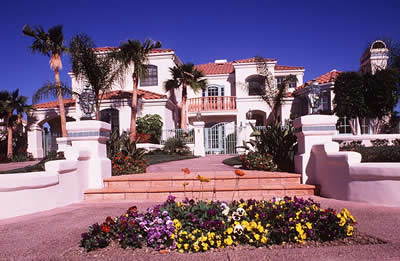 
When Board members are asked to identify prospects for planned gifts, they typically think of the affluent or most wealthy individuals within the organization's sphere of influence. Often those individuals are simply identified by grandeur of their homes. This approach usually makes no consideration of how philanthropic the prospect may be. Development professionals often make use of identification markers such as older folks, folks who have no children or grandchildren, folks who were never married, folks who are known philanthropists, and most importantly folks who have demonstrated their loyalty be giving consistently (regardless of amount) to your organization. Any mix of these markers can play an important role in determining those who may make a planned gift.
Over the next few months we will share some other criteria that may factor well into your thinking when it comes to planned gift prospecting. These factors were put forth by Neal P. Myerberg during his presentation to gift planners at the 2010 national Partnership for Philanthropic Planning conference. Mr. Myerberg is Principal at Myerberg Philanthropic Advisors, Old Greenwich, CT. Here is the first in the series:
People who need predictable income for retirement needs - with little confidence in the economy and risk tolerance logically lowered, many individuals seek safe harbors for their funds. Savings are at an historic high, and yields on cash equivalents are below normal inflation. An interesting consequence is the increasing popularity of charitable gift annuities. They have become a principal alternative to certificates of deposit and money market funds. Individuals are becoming more confident in the security of payments offered by regulated charitable organizations than those offered by banks and insurance/annuity companies.
|
|
|
|
|



