The Garden News
  Issue No. 11.45November 10, 2011  

 Site Button 


Get Social!

 Find us on Facebook 
 Follow us on Twitter 
View our videos on YouTube
Bob's Blog
LIVE Button  

 
Bob's Fall Photo Contest             
We are now accepting submissions for our first ever Fall Photo Contest!  Get out that camera and snap your best fall photo.  You can send us anything related to fall.  For example, photos of beautiful fall foliage or flowers, your house all spruced up for autumn, or that awesome Halloween costume!  The possibilities are endless.  Photos must be taken by you between September 1, 2011 and the contest deadline, Monday, Nov. 21st at 9AM Eastern.  We will post all of the submissions to an album on Facebook and the photo with the most "likes" will be declared the winner!


Johns Helpful Hints
How to Winterize Your Lawn Mower           


Winterizing Necessities

Stabilize the fuel. Gas that sits in a mower all winter can clog the carburetor. Come spring, you'll have to pay upwards of $100 to have the part professionally cleaned.


If you store the mower in the basement, run the engine until the gas is gone. If you keep it in the garage, fill the tank (to prevent condensation) and add a bit of fuel stabilizer, available at home centers and gas stations.
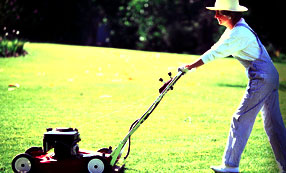
 

Add stabilizer every time you fill up your gas container since it helps engines run cleaner. This time around, remember to operate the mower for 5 minutes so that the stabilizer can reach the carburetor. (Tip: Whether you keep the mower in the basement or the garage, stick a cup full of mothballs near the engine to prevent rodents from nesting there.)


Change the oil. Routine oil changes will extend the life of the engine. Be sure to refill the oil reservoir to the designated mark on the dipstick, remembering that too much oil can be as bad for the engine as too little. (To dispose old oil properly, take it to a local service station or recycling center.)


Charge the battery. If your mower or tractor has a battery-powered starter system, periodically charge the battery throughout the winter. Otherwise, it will fail much sooner because it will not hold a full charge. Unlike your car, mower engines can not fully recharge your battery while mowing.


Clean the deck. Scrape grass clippings from the underside of the mower deck to prevent it from rusting. If you do this right after the final mow, spray from a garden hose should be enough to clear the clippings. Otherwise, an old bristled pot scrubber is an effective tool. Spray the cleaned deck with silicone spray to help prevent future build-up.


Winterizing Maybes

Replace the spark plug(s). Spark plugs typically need replacing every 100 hours of operation. (Tip: Buy an hour meter at the home center or parts supplier to keep track of running time.) You'll know right away from the corrosion if yours is spent. If the plug is in good shape, it's a good idea to remove it, pour an ounce of motor oil into the cylinders, crank the engine a few times, and then reinstall the plug.


Sharpen blades. Save yourself the hassle next spring by getting your blades sharpened now. Keep a second blade on hand for when the first one is being sharpened. Change blades every month during the mowing season to keep dull blades from butchering grass.


Service the air filter. Refer to the owner's manual to see if you should clean or replace the filter and how frequently.


Replace the fuel filter. Refer to the owner's manual for specific instructions. Mowers usually don't have a fuel filter, though many lawn tractors do.



Uncle Jim's Almanac

November 2011 

1st-2nd Good Days For Planting Peas, Squash, Corn, Tomatoes And Other Aboveground Crops.
3rd-4th 
Kill Plant Pests On These Barren Days.
5th-7th 
Favorable Days For Planting Aboveground Crops. Extra Good For Vine Crops, Where Climate Allows.
8th-9th 
Neither Plant Nor Sow On These Barren Days.
10th-11th 
Plant Root Crops, Where Climate Permits. Good Days For Transplanting.
12th-13th 
Any Seed Planted Now Will Tend To Rot.
14th-15th 
Best Planting Days For Fall Potatoes, Turnips, Onions, Carrots, Beets And Other Root Crops, Where Climate Is Suitable. Also Plant Seedbeds And Flower Gardens. Good Days For Transplanting.
16th-19th
 Poor Period For Planting. Kill Plant Pests, Clear Fencerows/land.
20th-22nd 
Favorable Days For Planting Root Crops. Fine For Sowing Grains, Hay, And Forage Crops. Plant Flowers.
23rd-24th 
Plant Carrots, Beets, Onions, Turnips, Irish Potatoes And Other Root Crops, In The South. Lettuce, Cabbage, Collards, And Other Leafy Vegetables Will Do Well. Start Seedbeds. Good Days For Transplanting.
25th-27th 
Poor Planting Days.
28th-29th 
Good Days For Planting Peas, Squash, Corn, Tomatoes And Other Aboveground Crops.
30th 
Kill Plant Pests On This Barren Day.  


"Sell not virtue to purchase wealth, nor Liberty to purchase power." 

-Benjamin Franklin, Poor Richard's Almanack, 1738


       Plant Button
 

Kitchen Head

Quick Sloppy Joes   

by: Corinna Barnitz


 Ingredients

3 lbs. ground beef

3 cups ketchup

2/3 cup sweet pickle relish

1 packet of onion soup mix


 Directions

Brown burger, drain. Stir in rest of ingredients.  Heat through and serve.


Send your recipes to ask@bobsmarket.com


Picture of the Week   

Tom planting pansies at our HQ in Mason, WV.
Photo by: John Morgan
Taken: 11/7/11
Send Your Garden Photos to ask@bobsmarket.com


Sub Button

Site Button

Ustream Banner

This week we'll be exploring the science behind fall!


Check out Bob's Market LIVE, our UStream show, each Friday at 4 pm.  You can watch it on our blog, our Facebook page, or directly on Ustream.


Click Here for Last Week's Show

 
Bob's Market & Greenhouses
Mason, West Virginia 25260
1-800-447-3760