|
|
| Issue No. 11.44 | November 3, 2011 |
|
|
|
|

Get Social!
|
|
|
|
Announcing: Bob's Fall Photo Contest
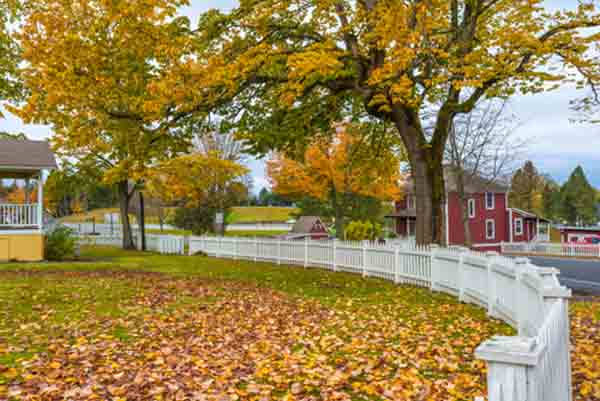 We are now accepting submissions for our first ever Fall Photo Contest! Get out that camera and snap your best fall photo. You can send us anything related to fall. For example, photos of beautiful fall foliage or flowers, your house all spruced up for autumn, or that awesome Halloween costume! The possibilities are endless. Photos must be taken by you between September 1, 2011 and the contest deadline, Monday, Nov. 21st at 9AM Eastern. We will post all of the submissions to an album on Facebook and the photo with the most "likes" will be declared the winner! |
|

Why Leaves Change Color in Autumn
We all enjoy the colors of autumn leaves. The changing fall foliage never fails to surprise and delight us. Did you ever wonder how and why a fall leaf changes color? Why a maple leaf turns bright red? Where do the yellows and oranges come from? To answer those questions, we first have to understand what leaves are and what they do.
Leaves are nature's food factories. Plants take water from the ground through their roots. They take a gas called carbon dioxide from the air. Plants use sunlight to turn water and carbon dioxide into oxygen and glucose. Oxygen is a gas in the air that we need to breathe. Glucose is a kind of sugar. Plants use glucose as food for energy and as a building block for growing. The way plants turn water and carbon dioxide into oxygen and sugar is called photosynthesis. Photosynthesis comes from Greek and means "putting together with light." A chemical called chlorophyll helps make photosynthesis happen. Chlorophyll is what gives plants their green color.
As summer ends and autumn comes, the days get shorter and shorter. This is how the trees "know" to begin getting ready for winter.
During winter, there is not enough light or water for photosynthesis. The trees will rest, and live off the food they stored during the summer. They begin to shut down their food-making factories. The green chlorophyll disappears from the leaves. As the bright green fades away, we begin to see yellow and orange colors. Small amounts of these colors have been in the leaves all along. We just can't see them in the summer, because they are covered up by the green chlorophyll.
The bright reds and purples we see in leaves are made mostly in the fall. In some trees, like maples, glucose is trapped in the leaves after photosynthesis stops. Sunlight and the cool nights of autumn cause the leaves turn this glucose into a red color. The brown color of trees like oaks is made from wastes left in the leaves.
It is the combination of all these things that make the beautiful fall foliage colors we enjoy each year.
Cool Fact:
The green color in unripe bananas comes from chlorophyll, the same pigment that gives green leaves their color. As bananas ripen, the chlorophyll breaks down and disappears, revealing the yellow color which has been there all along. The yellows and oranges of autumn leaves are also revealed as their chlorophyll breaks down. Of course, other changes also occur as bananas ripen: the starches change to sugar and the flesh softens as pectin (a carbohydrate) breaks down.
|

This past Wednesday if you were watching WOWK 13's 6:00 news broadcast you probably seen a great segment on pansies and poinsettias. It was such a treat to show Spencer Adkins around the greenhouses here at Bob's.
|
1st-2nd Good Days For Planting Peas, Squash, Corn, Tomatoes And Other Aboveground Crops.
3rd-4th Kill Plant Pests On These Barren Days.
5th-7th Favorable Days For Planting Aboveground Crops. Extra Good For Vine Crops, Where Climate Allows.
8th-9th Neither Plant Nor Sow On These Barren Days.
10th-11th Plant Root Crops, Where Climate Permits. Good Days For Transplanting.
12th-13th Any Seed Planted Now Will Tend To Rot.
14th-15th Best Planting Days For Fall Potatoes, Turnips, Onions, Carrots, Beets And Other Root Crops, Where Climate Is Suitable. Also Plant Seedbeds And Flower Gardens. Good Days For Transplanting.
16th-19th Poor Period For Planting. Kill Plant Pests, Clear Fencerows/land.
20th-22nd Favorable Days For Planting Root Crops. Fine For Sowing Grains, Hay, And Forage Crops. Plant Flowers.
23rd-24th Plant Carrots, Beets, Onions, Turnips, Irish Potatoes And Other Root Crops, In The South. Lettuce, Cabbage, Collards, And Other Leafy Vegetables Will Do Well. Start Seedbeds. Good Days For Transplanting.
25th-27th Poor Planting Days.
28th-29th Good Days For Planting Peas, Squash, Corn, Tomatoes And Other Aboveground Crops.
30th Kill Plant Pests On This Barren Day.
"Sell not virtue to purchase wealth, nor Liberty to purchase power."
-Benjamin Franklin, Poor Richard's Almanack, 1738
|
|

Hawaiian Ham
by: Sue Barnitz
This recipe was recently served during the IMGC 2011 tour of our facility. Enjoy!
Directions
For every 4 lbs. of ham (I use Virginia Baked Ham) cover with 2 cups brown sugar, 15oz of crushed, undrained pineapple, and 1/2 cup water. Cook overnight in a crock pot on low.
Send your recipes to ask@bobsmarket.com
|
|
Picture of the Week

Sandy and Becky getting ready for Christmas at our Gallipolis Market.
Photo by: John Morgan
|
|

This week we'll be exploring the science behind fall!
Check out Bob's Market LIVE, our UStream show, each Friday at 4 pm. You can watch it on our blog, our Facebook page, or directly on Ustream.
Click Here for Last Week's Show
|
Bob's Market & Greenhouses
Mason, West Virginia 25260
1-800-447-3760
|
|
|
|
|
|
|
|
|
|
|








