
Ornamental cabbage and kale are in the same species, Brassica oleracea, as edible cabbages and kale. They are the result of hybridizing and, although they are still edible, they aren't as tasty and tender as their cousins. Although sometimes referred to as flowering cabbages, it's the leaves that give the plants their color and interest as ornamentals.
Ornamental Cabbage: The plants with smooth leaf margins are considered flowering cabbage.
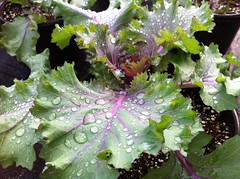
Flowering Kale: Plants with serrated or fringed leaf margins are considered the flowering kales, which are further divided into the "fringed leaved cultivars" (those with ruffled leaves) and the "feather leaved cultivars" (those with more finely serrated leaves). I wouldn't make too fine a point about it though. That would make the plant in the photo above a fringed leaved flowering kale.
Unless you are growing commercially, there's not that much variety to choose from. Most seed packets are simply labeled "Ornamental Cabbage". It's best to just choose color combinations that appeal to you.

Ornamental cabbage and kale look especially good in a large planting, where their color really stands out. Since they are low growers, you'll often see them as edging plants, where their purplish hues blend in well with other fall colors. If you only want 1 or 2 plants, they look less out of place in containers, than they do scattered throughout a garden. In fact, they make nice, long lasting replacement plants for spent summer containers.
As with all Brassicas, ornamental cabbages and kales prefer to be grown in cool weather. Although you can plant them out at anytime, the colorful pigmentation doesn't develop until after frost or prolonged cold weather. If you plant them too early in the fall or late summer, the plants will get leggy and remain green. Besides, early plantings will be susceptible to cabbage pests like cabbage loopers that will disappear after frost.
Both cabbages and kale prefer a slightly acidic pH of about 5.8 - 6.5. They like to dry out slightly between watering, but stress if left dry for prolonged periods.
Growing Ornamental Cabbage from Seed: Sow seeds 3-4 months before you need full sized plants and at least 6-10 weeks before a frost is expected. If you start seeds in cell packs or flats, be sure to transplant to larger pots as soon as the first true leaves appear. You don't want to risk them getting pot bound so young. If seedlings get leggy, you can replant up to the bottom of the cotyledons (the first leaves on a seedling).
You could also simply direct seed your cabbages in the garden, since the weather will be warm. Cover lightly with soil and keep the soil moist until germination. Seeds should sprout within 1-2 weeks. Thin to about 18-24" apart, when seedlings are 3-4 inches tall.
Maintenance:
Ornamental cabbages and kale can last throughout the winter, but their appearance depends a lot on the weather. Too hot and they will bolt, too wet and harsh and they'll look tattered. But since most pests are scarce in the cooler months, there aren't too many problems to look out for. Aphids seem to be the most persistent pests, although cabbage looper, and leaf roller are still active in some areas and powdery mildew can become a problem if the weather remains damp. And many animals find them as tempting as edible cabbages.








