|
|
| Issue No. 10.26 | July 1, 2010 |
|
|
|
The Decleration of Independence
Drafted by Thomas Jefferson between June 11 and June 28, 1776, the Declaration of Independence is the nation's most cherished symbol of liberty and Jefferson's most enduring monument. Here, in exalted and unforgettable phrases, Jefferson expressed the convictions in the minds and hearts of the American people. The political philosophy of the Declaration was not new; its ideals of individual liberty had already been expressed by John Locke and the Continental philosophers. What Jefferson did was to summarize this philosophy in "self-evident truths" and set forth a list of grievances against the King in order to justify before the world the breaking of ties between the colonies and the mother country. We invite you to read a transcription of the complete text of the Declaration. |
Gardening History: The Victory Garden

In March of 1917, Charles Lathrop Pack organized the National War Garden Commission and launched the war garden campaign. During World War I, food production had fallen dramatically, especially in Europe, where agricultural labor had been recruited into military service and remaining farms devastated by the conflict. Pack conceived the idea that the supply of food could be greatly increased without the use of land and manpower already engaged in agriculture, and without the significant use of transportation facilities needed for the war effort. The campaign promoted the cultivation of available private and public lands, resulting in over five million gardens and foodstuff production exceeding $1.2 billion by the end of the war.
During World War II Victory Gardens once again became a necessity. Amid regular rationing of canned food, a poster campaign, "Plant more in '44!", encouraged the planting of victory gardens by nearly 20 million Americans. These gardens produced up to 40 percent of all the vegetable produce being consumed nationally.
It was emphasized to home front urbanites and suburbanites that the produce from their gardens would help to lower the price of vegetables needed by the US War Department to feed the troops, thus saving money that could be spent elsewhere on the military: "Our food is fighting," one US poster read. In Britain the slogan "Dig for Victory" was ubiquitous.
Although at first the Department of Agriculture objected to Eleanor Roosevelt's institution of a victory garden on the White House grounds, fearing that such a movement would hurt the food industry, basic information about gardening appeared in public services booklets distributed by the Department of Agriculture, as well as by agribusiness corporations such as International Harvester and Beech-Nut. The US Department of Agriculture estimates that more than 20 million victory gardens were planted. Fruit and vegetables harvested in these home and community plots was estimated to be 9-10 million tons, an amount equal to all commercial production of fresh vegetables.
Victory gardens were planted in backyards and on apartment-building rooftops, with the occasional vacant lot "commandeered for the war effort!" and put to use as a cornfield or a squash patch. During World War II, sections of lawn were publicly plowed for plots in Hyde Park, London to publicize the movement. In New York City, the lawns around Central Park were devoted to victory gardens, as were portions of San Francisco's Golden Gate Park.
The Fenway Victory Gardens of Boston, Massachusetts and the Dowling Community Garden in Minneapolis, Minnesota, remain active as the last surviving public examples from World War II. Most plots in the Fenway Victory Gardens now feature flowers instead of vegetables while the Dowling Community Garden retains its focus on vegetables.
Since 2001 there has existed a growing interest in victory gardens. A grassroots campaign promoting such gardens has recently sprung up in the form of new victory gardens in public spaces, victory garden websites and blogs, as well as petitions to both renew a national campaign for the victory garden and to encourage the re-establishment of a victory garden on the White House lawn. In March 2009, First Lady Michelle Obama, planted a 1,100 square foot "Kitchen Garden" on the White House lawn, the first since Eleanor Roosevelt's, to raise awareness about healthy food which was one of Mrs. Obama's advocacy issues.
|
Summer Lawn Tips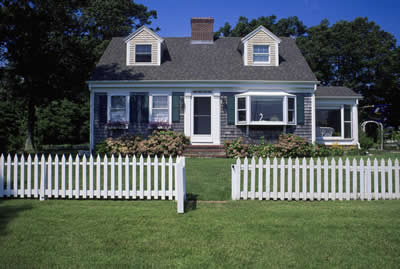
- Don't Over Fertilize. Applying fertilizer during hot, dry summer days can be a disaster. It can burn your lawn to a crisp. Instead fertilize in the spring, but if you feel the need to feed, use a time-release fertilizer with a low nitrogen content.
- Water Regularly. During the summer it is possible to water on a regular basis and still have your lawn be too dry. On hot, sunny days the amount of water that evaporates during watering can be much higher than usual. Check to make sure that the soil is moist down to at least six inches.
- Let it Grow! Overcutting your lawn is a sure way to harm it in the heat of summer. To help prevent the afore mentioned evaporation, try keeping your turf at least three inches long. This will act sort of like mulch and help hold in moisture.
- Don't Slip and Slide. Although it is quite refreshing for kids, covering your lawn with a plastic Slip and Slide is a sure way to smother it.
- Do go Barefoot! There's nothing better than the feeling of cool, soft grass between your toes on hot summer days. Research shows that folks who go barefoot for extended periods of time on a regular basis tend to have healthier feet and better posture. What better way is there to enjoy your hard-earned "green"?
|
 Blackberries
 Rubus Allegheniensis Rubus Allegheniensis is a species of Blackberry that is native to West Virginia. Mostly found in old pastures and roadsides in nearly every county of the state, the Allegheny Blackberry is a favorite among wild blackberry enthusiasts. It is a rubust, prickly highbush plant with gently arching canes and large, thimble-shaped berries. Blackberries are a bramble which is used to refer to any plants in the genus rubus in the rose (rosaceae) family. Fellow brambles include raspberries, and loganberries. The word "bramble" comes from the Germanic word "bram-bezi" meaning "thorny". All brambles are very thorny, so pick with caution! Source: Flora of West Virginia by Strausbuagh and Core |
|
- Thursday, July 1st - Plant Late Cabbage, Cauliflower, and Brussel Sprouts
- Friday, July 2nd - Seed Late Corn and Snap Beans
- Saturday, July 3rd - Seed Kale and Broccoli
- Sunday, July 4th - INDEPENDENCE DAY!
- Monday, July 5th - Control Cabbage Worms
- Tuesday, July 6th - Seed or Plant Endive
"We must all hang together, or assuredly we shall all hang separately."
-Benjamin Franklin, at the signing of the Decleration of Independence, July 4, 1776
|
|
Red, White, and Blueberry Dessert
Submitted by Stella Morgan, Letart, WV
Ingredients
-
2 packages (8 ounces each) cream cheese, softened
-
1/2 cup sugar
-
1/2 teaspoon vanilla extract
-
1/2 teaspoon almond extract
-
2 cups heavy whipping cream, whipped
-
2 quarts strawberries, halved, divided
-
2 quarts blueberries, divided
Directions
In a large bowl, beat cream cheese, sugar and extracts until fluffy. Fold in whipped cream. Place a third of the mixture in a 4-qt. bowl. Reserve 20 strawberry halves and 1/2 cup blueberries for garnish.
Layer half of the remaining strawberries and blueberries over cream mixture. Top with another third of the cream mixture and the remaining berries. Spread the remaining cream mixture on top. Use the reserved strawberries and blueberries to make a "flag" on top.
|
|
Picture of the Week

Freshly Watered Caladiums
Taken by: John Morgan
5/20/2010 |
|
|
|
Bob's Market & Greenhouses
Mason, West Virginia 25260
1-800-447-3760
|
|
|
|
|
|
|






