| CURRENT SEARCHES | | |
Please think of the excellent people you know who might be interested in hearing about these outstanding opportunities.
Manufacturer of Advanced Systems
Aerospace Machine Shop
Producer of Engineered Control Products Global Sensor Company Producer of Engineered Control Products
Director of Engineering
Manufacturer of Avionics Defense Communications Instruments |
| JOIN OUR LINKEDIN GROUPS! | | |
Simply click the logo to become a member of these growing professional networking groups on LinkedIn!
The Defense Executive Network

The Aerospace Executive Network

The Aerospace & Defense HR Network

|
| Meet The Principals | | | Mark Bregman
CEO

Michael Boyle
President
Keith Ogata Principal 
More |
| BOB's on Vimeo! | | |
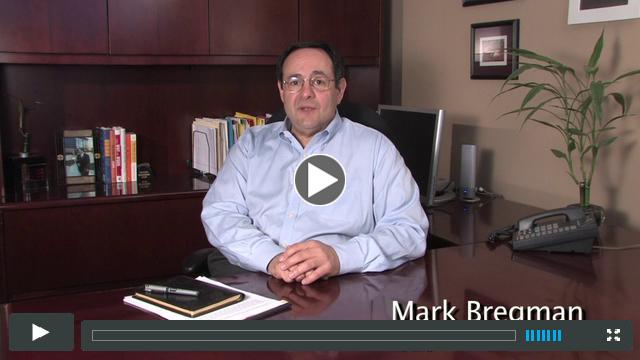 | | Check out this video on BOB Search! |
|
|
Google It
| | |
Did You know BOB Search is listed #1 for
"Orange County Recruiting Firms"!
See for yourself.
|
|
|
Greetings!
This month we are thrilled to share our interview with Robert Huffman, senior executive with L-3 Communications Precision Engagement Sector. We also share with you some of the most common mistakes interviewers make when making a new hire. Our book review series also kicks off this month with a brief review on REWORK (by J.Fried and D. Heinemeier).
|
| EXECUTIVE INTERVIEW - ROBERT HUFFMAN | | L-3 Communications
L-3 Communications is the sixth largest defense company in the US. The $16 billion publicly traded company with over 100 business units, has recently become organized into groups and sectors. Precision Engagement Sector, which is part of L-3's Sensors and Simulation Group, includes companies involved in weapons guidance, GPS, displays, instruments, unmanned aircraft and more.
Robert Huffman began his career at Interstate Electronics Corp. [IEC] in Anaheim, CA after receiving his BSEE. IEC became part of L-3 in 1999. Bob has served as VP of Marketing, VP of Engineering, and President of IEC. Recently, he has joined the executive staff of the Precision Engagement Sector, and is focused on strategic initiatives and acquisition activity. We were fortunate to chat with Bob, and get his personal views on the defense business. The views expressed are those of Bob Huffman, and do not represent an official position of L-3 Communications.
Q: How has the recession impacted the defense sector, and what has L-3 PE done to stay ahead?
A: The recession had a delayed impact upon the defense sector, however has certainly had an impact. As we saw spending trending negative, we began to take actions. Specifically, we have focused upon technologies that are significant to continue a proactive defensive posture for the US and our allies both home and abroad. We have created agile teams that listen to the needs of the customers and we have invested into technologies that can be quickly fielded with little delay and development, such as gathering and disseminating intelligence.
Q: To get and keep good people, what is the most important organizational strategy you use?
A: Largely we attract good people because we do very interesting work. Once they are on board, we believe in our people. We believe in communication throughout the organization, both in recognition as well as the identifying our challenges. When our people understand our complete situation, the organization is able keep in step. Further we believe in empowerment; let the organization attack the problems and find solutions. Lastly, but most importantly, accountability; management must measure and keep accountable the organizational performance.
Q: What do you do to keep your team motivated in tough times?
A: Most important is to listen first, then communicate. Be sure to understand the issues from all angles. Make sure they don't feel alone, make sure they understand that you appreciate the situation and that you are willing to help in any feasible way. If it is the larger economy and therefore the future that has them concerned, be sure to let them know what management is doing to win new business. Involve them into the solution.
Q: What is your expectation for the economy in the year ahead?
A: Very challenging, but not without opportunity. We face a divided government, continuing resolution funding and deficit spending at historic rates. However, we also face unrest and terror threats on a daily basis. Our investment dollar, both the government and private sector, will need to be very wisely spent and will come under scrutiny frequently. We must continue to dialogue with those in need of solutions to ensure that we are on track to provide them. Organizationally, we need to remain flexible and agile to face the challenges.
Q: Productivity has been high in the US. Do you think there will be a jobless recovery, or will employment pick up soon to keep pace with economic growth?
A: Unfortunately, I think employment will be slow to recover. The Government seems to be unsure as to how to handle some very large and long term situations, the debt, healthcare, taxes, social security, defense. The private sector reacts and slows down. However, the entrepreneurial spirit is alive and well. There will be breakthroughs that spur on the growth and it will happen. I just see it taking a bit longer than we all would like.
Q: What is the secret of your success? What personal strategies have worked best for you?
A: I am a sports enthusiast and have been using sports metaphors throughout my career. I am very big on John Wooden, and have read many of his books. They contain some of the simplest phrases and yet some very profound wisdom: Listen first before you seek to be understood. I am a people person; I like to communicate with the team and listen to what motivates them. Perhaps our most important discussions are those of brutal, yet polite and honest feedback with people.
Q: What is the biggest mistake you ever made in business? How does it affect your thinking or actions today?
A: Early in my career, I didn't dedicate ample time necessary to recruit and hire the best candidate. It seemed the press of the day was always more important than avoiding hiring mistakes. Since then I have learned the error in my thinking. Being careless and ultimately hiring the wrong person is bad on so many levels. Eventually you are repaid by having to do it all over again - if you're lucky. Now I spend hours with my staff, my recruiter and ultimately several candidates to ensure I have taken the time, done my diligence and maximized my success possibilities.
Q: What advice do you have for other executives in the defense products sector?
A: We live in interesting times. In the morass of uncertainty lives opportunity; ready yourself and your organization to be flexible and agile. Open your network for personal and professional growth. Expand your customer exposure, yet narrow your focus on the selected opportunity. Revisit your organization, empower them, trust them, and hold them accountable, for they too strive for success.
|
| THE DOZEN WORST INTERVIEWER MISTAKES | | |
And How to Avoid Them

We see the good, the bad, and the ugly in employer interviewing because we debrief every candidate who visits one of our employer clients. We hear what they like and what they don't like about the employer interview. The advice below applies specifically to recruited candidates - those that are now working, but considering a possible change - and who need to be treated a bit differently than "applicants" - those who are actively pursuing a new job. However, these tips really can apply to ALL candidate interviews.
1. Being Unprepared: The candidate can tell if you haven't taken a look at their file recently (or ever).
- A five minute review of candidate info makes you look far more professional, and is respectful of the candidate.
2. Using Wrong Criteria: Many interviewers assess "personality" - it is human nature to notice confidence, poise, communications skills, etc. - but FAIL to assess true capability.
- Suspend "first impression" for 30 minutes, and create meaningful questions to assess the individual's capability to produce the desired results.
3. No Defined Objectives: Without defined objectives, interviewers are limited in assessing what the candidate has that can predict future performance.
- Create SMART (specific, measurable, etc.) performance objectives and ask relevant questions.
4. Missing Candidate Motivation: Interviewers often "sell" the positive attributes of the company and/or the position, without knowing what the candidate wants.
- ASK the candidate why they are considering a change, and what would most attract them to a new role (then talk about company/job features that match their greatest interest). 5. Screening Out: Some inexperienced or untrained interviewers (often called in on panel screening) feel like they are doing a better job if they rule someone out rather than rule in.
- Make sure everyone on the interview team knows the critical screening criteria, and how hard it may be to find ideal candidates. Help them adjust their attitude to rule in.
6. Negative Screening: Following the termination of a poor performer, interviewers sometimes screen negatively - to make sure the new prospect isn't like the person they just let go. Candidates experience discomfort in this type of interview.
- "Reframe" the failings of the last person into the positive attributes you need, and your questions will take a more favorable tone.
7. Failing to "Recruit": Busy interviewers often set an agenda focused on "What do I need to know?", and fail to incorporate recruitment (what the candidate needs to know) into the meeting. Evaluating the candidate is important, but remember they are evaluating you too.
- Plan to include info about the company, be responsive to candidate motivation, and leave time for candidates to get their questions answered.
8. Talking instead of Interviewing: We know one executive who talks about his company for 20 minutes, then asks the candidate "what questions do you have for me?" - without asking the candidate a thing! Candidates are actually uncomfortable getting hired on style or chemistry alone, and they wonder how this type of interview could yield a good hire.
- Even if you are relying on others for technical or objectives-oriented screening, you should ask some questions that will give you information on which to make a sound decision. This will help the candidate to trust that you know how to ensure a good fit.
9. Interviewer Bias: Some interviewers start off with strong biases, such as "I only want someone from a big (or small) company" or "I want someone with a personality just like mine." Such biases are blinders that prevent you from seeing real capability.
- Keep an open mind. People from varied backgrounds can bring different strengths to the table. Building a team with a balance of people, who possess complementary personality traits is a very strong management strategy.
10. Intuitive Interviewing: Senior executives often pride themselves on trusting their gut - using an intuitive approach to selection. They may miss the substance of whether the person can really perform.
- Objective criteria (evidence of success) is critical in hiring. If you won't do it - assign this part of the screening to another person on your interview team.
11. Illegal or Inappropriate Questions: Amazingly, interviewers still ask about family, age, and other off-limits issues. They also ask subtle but also inappropriate questions, like: Would you need flexible hours (implying and fishing for family info)? Would you need relocation assistance (How are you going to handle that commute)?
- Stick to the straight and narrow, and don't cause candidates to squirm by tiptoeing over the line.
12. No Rapport / Comfort: Lots of people doing interviews hate interviewing, and do it only because they have to. It shows. When the interviewer does nothing to establish rapport or provide a comfortable environment, it is a huge turn-off.
- Meet the candidate at their model of the world, and seek to create an atmosphere of comfort. Providing this for another person will actually make YOU more comfortable as well. We are planning a follow up to this article and would love to hear your worst interview nightmares and horror stories. Send us a note, and we'll focus on case stories next time.
|
| BOOK REVIEW: REWORK | | |
Authors Jason Fried and David Heinemeier

Authors Jason Fried and David Heinemeier wrote Rework to highlight their surprising yet simple approach to creating and maintaining a small business, using the success they have had with their company, 37signals, as a bench mark. Rework makes some counter-intuitive arguments like, workaholics can only bring a company down, and, planning only leaves you unprepared to improvise when unexpected instances arise. As entrepreneurs, the authors preach that business owners must simplify and do less. Fried and Heinemeier continue on to say that if you don't do something that you feel is making a difference, then you will never be able to fully commit to making it successful. They argue that decisions shouldn't be put off; they should be handled immediately. After reviewing this book, the reader is left with the notion that competition should be ignored and business owners should create a product that other businesses will want to copy, and not copy what is already there. The authors make unorthodox points throughout their book that could leave the reader to question how well their business actually does. Today, 37signals consists of only 16 employees, but they make an impressive impact on over 3 million people who are using their products.
|
|
|
|
|



