|
Ask the Expert: A Special Event for Pilots
Greetings!
Starting later this year, all pilots who wish to renew a medical certificate will be required to use the FAA's online process called MedXpress before visiting their Aviation Medical Examiner. To answer questions about this process, Dr. Randle S. Corfman will present a Wings Safety Seminar at Wausau Downtown Airport on Wednesday, April 25th at 6:30 pm. Dr. Corfman is an AME in Park Rapdis, Minnesota, He will address the changes in the application process as well as answer pilots' questions about medical issues. To receive WINGS credit for this seminar, attendees should pre-register on the FAA website, however, no reservation is needed to attend. |
|
 The pilot is incapacitated. How will I get this thing down? The pilot is incapacitated. How will I get this thing down?
In early April, a woman successfully landed her husband's airplane at Sturgeon Bay after he passed away at the controls. She was fortunate to have a very experienced flight instructor flying alongside her in another airplane, to advise her how to make the landing. The airplane was damaged, but she was not injured.
Would you know what to do? Wausau Flying Service offers "Cockpit Companion" training for those who fly often as passengers. This training is designed to teach you how to find an airport and get back to the ground safely. It is not a substitute for learning to fly, but it is designed to save lives.
In many cases, you can take this training in the airplane you fly in most often. Call 715-845-3400 and speak with John or Gil. Here is how she did it: 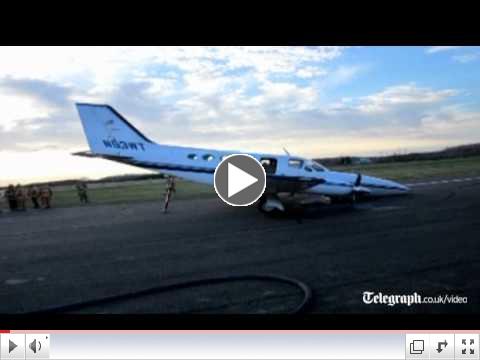 | | Woman, 80, lands plane after pilot dies |
|
Free Flying Seminars for Wings Credit and More:
On April 28th, CFI John Chmiel will present a free clinic: "Taildragger Aviating Techniques - the Art of Flying Tailwheel." Attending this free seminar qualifies for Wings knowledge credit.
John will also present "What All Pilots Should Know About Stalls and Spins" on May 12th. The ground portion of this clinic is also free. Just click on his name above to register.
On June 9th, pilots interested in learning more about aerobatics can attend a third free seminar, "Flying the Aerobatic Basics."
All three programs begin at 9:00 o'clock and wll end before noon. Please register so the conference room can be set up in advance to accommodate the proper number of attendees.
|
Accomplishments
Lyman Hatz has completed the 8-module NATA Professional Line Service Training Course offered by Phillips 66. This means he is well-prepared for all line duties such as fueling and moving almost any type of airplane. In addition to working on the line at Wausau Flying Service, Lyman is an A&P/IA and operates Aircraft Maintenance of Wausau at the Wausau Downtown Airport. He can be reached at LymanHatzAPIA@AOL.com |
|
|
|
 |
|

Know Your Airspace
Just a few miles south of Wausau you will find Class D airspace at the Central Wisconsin Airport. This extends from the surface up to 3800 MSL and from the center of the airport out to five miles.
.Approaching from the north, the Weston power plant stacks are a good landmark to know where the Class D airspace begins.
Pilots are required to establish and maintain two-way radio contact with the Central Wisconsin Tower while in Class D and prior to entering it.
Some VFR pilots may prefer to just avoid the airspace when they are passing Mosinee. However, they are putting themselves at risk if the tower does not know they are nearby, and airliners are approaching or departing and passing through their altitude.
Central Wisconsin Tower is not open 24 hours. When it is closed, the airspace becomes Class E and the tower frequency, 119.75, becomes a Common Traffic Advisory Frequency. You will also observe a Unicom frequency listed for Central Wisconsin Airport. This is the appropriate frequency for two-way communications with the FBO, but not for traffic calls.
|
 |
|



