|
|
|
|
|
Dear Friend,
Well, winter is upon us (hard to believe given the balmy weather though), and I'd like to share with you the latest issue of the COAST4U Quarterly, and thank you for being part of this coastally-minded community. Among other things, this issue introduces our excellent new Executive Director, Charles Lester; draws attention to the state of beach access in California; and offers the chance to test your wits in two coastal quizzes. Enjoy!

Cheers,
Christiane Parry
Public Education Manager |
|
We Welcome New Executive Director,
Charles Lester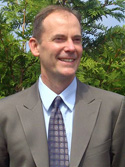
We are happy to introduce to your our new Executive Director, Dr. Charles Lester. Dr. Lester succeeds Peter Douglas as the fourth Executive Director to lead the Commission since its creation in 1972 with the passage of Proposition 20. Prior to his appointment, Charles served as Senior Deputy Director of the Commission, holding that position since 2006. His employment at the Commission began in 1997. Previously, Dr. Lester was an Assistant Professor of Political Science at the University of Colorado, Boulder.
Dr. Lester received his Ph.D in Jurisprudence and Social Policy from the University of California at Berkeley. In addition, he earned his J.D. at Boalt Hall School of Law and a B.A. in Geochemistry from Columbia University.
To learn more, click here |
Making the Coast Available to All 
One of the Coastal Commission's main focuses is making sure all Californians and visitors can access to our beautiful shoreline. The Coastal commission recently released a new report that describes and illustrates over 111 access points in the southern portion of our state (San Luis Obispo County and south) it has worked to make public since 1973.
These access points includes walkways or stairways from the nearest public road to the shoreline or coastal viewpoint. While many access points have been established, some have yet to be opened to the public. For example Los Angeles County has only opened 13 of the 34 acquired sites. "We know our work is cut out for us because over half the sites in the most populous county are not open, " Linda Locklin, Coastal Access Program Manager told the LA Times. "That's not good enough."
How accessible is the coast in your county? Find out here. To learn more about the Coastal Access Program and to purchase a Coastal Access guide, please visit our website. |
|
Quiz: Destination Series
Northern elephant seals are the largest seals, with males reaching sizes of up to 16 feet and 5,000 pounds. These massive animals were hunted almost to extinction, but their populations have since rebounded. Viewing their loud and violent mating behavior is an exciting winter pastime in several locations along the California coast. At this destination, the elephant seals are easily viewed just steps from a parking lot off of Highway One.
Name our destination:
A. Point Reyes
B. Año Nuevo
C. Point Piedras Blancas
D. Southeast Farallon Island
Discover the answer... |
|
Quiz: What Are the Most Common Pieces of Trash Found at Beach Cleanups in California?
What do you think are the top 3 most common items found at beach cleanups in California (and in what order)?
A. Plastic bags, building/construction
materials, straws
B. Cigarette butts, food wrappers and containers, caps and lids
C. Fishing line, six-pack holders, cigarette butts
D. Plastic bottles, aluminum (soda) cans, cigarette butts
Click here to find out |
|
|
Whale Tail Dollars at Work

The Whale Tail® Grants Program has now funded its first project that uses which 21st-century form of public education?
Click here for the answer
We are offering monthly drawings for fabulous prizes - no purchase is necessary to enter. Just visit www.ecoplates.com
Support these programs.
Buy a Whale Tail License Plate today! |
|
Be a Coastal Steward!
Do you eat fish? You can support sustainable fisheries by only buying fish species that are known to have healthy populations. The Monterey Bay Aquarium's Seafood Watch program can help you make informed choices at the market or at a restaurant. Email us if you'd like to receive a handy pocket guide, or visit www.seafoodwatch.com to download a smart phone app. The Seafood Watch website also has sustainable seafood recipes to get you started. For more Coastal Stewardship tips, and to take the Pledge online, visit our website. |
|
About Us
The Public Education Program protects and restores California's coast and ocean by teaching, inspiring, and empowering the public to take environmentally positive action. The Program serves people of all ages and strives to be inclusive by targeting underserved communities and groups.
For information on all of our Public Education Programs, click here, or contact us at
California Coastal Commission
45 Fremont St, Suite 2000
San Francisco, CA 94105
(800) COAST-4U
coast4u@coastal.ca.gov
 
|
|
|
|
|
Save $5 |
Save $5 on the purchase of the 2009 Coastal Cleanup Day anniversary t-shirt (originally priced at $15). This ring-spun (think soft) slim-fit shirt is made of 100% cotton and is pre-shrunk. To see the sizes we have available, please click here. To place your order, download the order form and mail a check, along with this coupon to
California Coastal Commission Public Education Program 45 Fremont St, Suite 2000 San Francisco, CA 94105
Please make checks payable to "CSPF/Adopt-A-Beach" | | Offer Expires: 12/31/2012 or while supplies last |
|
|
|