| 2009 Board of Directors |
Randy Cobb - Chair
AGL Resources
Tim Bratcher - Secretary
Jones Day
Deloyd Johnson, CPA - Treasurer
Nexcen Franchise Management
June Cooley, D.Psy, RN
Atlanta Psychological Services
Juarlyn Gaiter, PhD
Centers for Disease Control and Prevention
Ann Hunter, LCSW
Children's Healthcare of Atlanta
John Parker
Paul, Hastings, Janofsky & Walker
Julie Samples
JPS Interiors
Tracey Webb
Community Volunteer
Marilyn Wright
Georgia Power Company |
Childkind Staff |
Karl Lehman
President and CEO
Stephanie Owens MSW
Vice President and Director of Program Services
Trisha Clymore
Business Manager, Asst. Secretary
Tameka Bowden
Recruitment & Training Specialist
Angela Burney
Placement Specialist
Dionne Castle
Administrative /Intake Specialist
Tanya Davis, MSW
Recruitment & Training Coordinator
Kelly Deckers, RN
Medical Intake Coordinator
Cody Jean
Placement Specialist
Christopher Jones
Placement Specialist
Shanda Maiolo
Family Support Services
Claudia Martinez
Quality Assurance Manager
Joe Sarra, MSW
Host Home Coordinator
Ranjit Singh
Marketing Specialist
J. Kennedy Smith
Placement Specialist
Tashana Tulloch, LAPC
Placement Services Coordinator
|

Email produced in part by
Mike Himelstein
|
|
 In Helping Families Raise Children with Special Health Care Needs at Home, Drs. Plaunché Johnson and Theodore Kastner of the American Academy of Pediatrics, write "Most parents desire to raise their children with special healthcare needs at home." This is no simple task for even the most extraordinary of parents.
What does it take to parent such a child? Johnson and Kastner offer a medical perspective; their article follows. The National Center on Birth Defects and Developmental Disabilities at the Centers for Disease Control and Prevention (CDC) provides a wealth of information. There is a brief article about the Center below. The CDC includes links to other sites as well.
The foe of any family providing care for a medically fragile or developmentally delayed child is isolation. Without a supportive community and access to needed resources, few parents will survive the financial and emotional strain. No family can be an island. We offer one story that illustrates the role we must have if children are to be kept free of institutional facilities or state custody.
Childkind's Transition Support Services program was created for parents who want to raise their medically fragile or developmentally delayed children, but need assistance connecting with the wealth of community resources they will need. It can prevent the kind of isolation that so easily undermines their ability to be good parents.
Finally, we wanted to alert you to a recentently published book: Annie's Ghosts by Washington Post reporter Steven Luxenberg. A link to hs NPR interview is included. One reviewer noted the book would promote "positive thinking" towards people with developmental challenges. |
|
 Helping Families Raise Children With Special Health Care Needs at Home Helping Families Raise Children With Special Health Care Needs at Home
Clinical Report Guidance for the Clinician in Rendering Pediatric Care
Chris Plauche' Johnson, MD, MEd; Theodore A. Kastner, MD, MS; and the Committe/Section on Children with Disabilities
Most parents desire to raise their children with special health care needs at home. However, sometimes individual circumstances
and societal factors strain the family's ability to provide for their child's special needs. Advanced medical care and sophisticated technology have made it possible for more children with special health care needs to survive into adulthood, often with chronic illness and disability.... Social isolation secondary to the additional care giving demands imposed by the child's condition coupled with an increase in residential mobility often separates families from their extended families and natural support systems.
A family's requirement for community supports depends not only on the characteristics of the child (ie, the degree of supervision, habilitation, and health care needed) but also on structural (eg, single parent household), functional (eg, coping strategies), and external (eg, income and work schedules) characteristics of the family.
Read the Full Article (PDF)
|
National Center on Birth Defects and Developmental Disabilities
 The Centers for Disease Control and Prevention and Developmental Disabilities The mission of the CDC's National Center on Birth Defects and Developmental Disabilities (NCBDDD) is to promote the health of babies, children and adults and enhance the potential for full, productive living. The Center works to:
- Identify the causes of birth defects and developmental disabilities;
- Help children to develop and reach their full potential; and
- Promote health and well-being among people of all ages with disabilities, including blood disorders.
Their web site, www.cdc.gov/ncbddd, contains a wealth of information about specific developmental challenges, stages of a child's development, links to important articles and primary research, and more. Everyone with an interest in medically fragile or developmentally delayed children should be familiar with this site. |
|
Somebody Else's Family
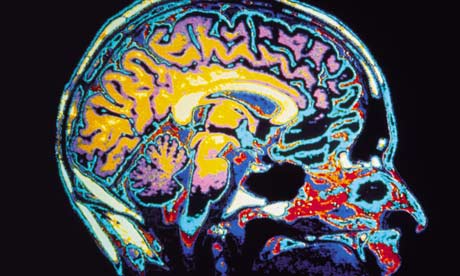 |
It is always happens to someone else. A teenager falls. He seems okay, a bit dizzy and sore perhaps. He waits for the pain to dissipate.
|
Two days later that teen is hospitalized with a traumatic brain injury; paralyzed with thought processes, language and sensations all severely impaired.
Fast forward six months. His single Mom was unable to provide both full-time care and hold down a full-time job. A combination of sporadic work and SSI disability provided insufficient income to pay for food, utilities, medical supplies, and everything else she and her two children needed plus maintain her car and mortgage payments. Isolation will turn a myriad of obstacles into one immense and seemingly unsolvable crisis. For this parent, problems grew in number, size, and complexity, reaching that proverbial tipping point. The once healthy stable family now faces foreclosure, repossession, unemployment, emotional exhaustion, and resignation to a break up of her family. Social IsolationTime and time again we encounter the same pattern: parents of children with medical and developmental challenges want to keep the same level of "independence" they had before. Not wanting to be a burden, feelings of guilt, anger, frustration, loneliness, inevitably leads to isolation. It is not uncommon for neighbors to be unaware of the family's struggles. Resource IsolationSkilled social workers and health professionals will help this mother resolve her major obstacles:
- Advocacy at the school level, insuring the local public school provides mandated educational services;
- Assistance with navigating the confusing world of Medicaid funded services such as in-home nursing;
- Find short-term funding to prevent foreclosure;
- Equipment and medical resources; and
- Guidance on building a network of community and neighborhood support systems.
This family is real. Their experience not uncommon to parents caring for medically fragile and developmentally delayed children. They will reach stability and, over time, develop functional independence.
Given the prevalence of pediatric developmental disabilities, the odds are there is such a child in your own community. Perhaps you could become part of their network of support.
|
Childkind Transition Support Services
Our Transition Support Services Program is designed to offer guidance and support to families with a medically fragile or developmentally challenged child. We are especially concerned about children who are transitioning home or to a new living environment after hospitalization or other out-of-home care arrangement.
Working with three Atlanta area pediatric hospitals and DHR/DFCS Child Protective Services, Childkind provides:
- Healthcare screenings to identify child health/developmental needs;
- Home and community assessment;
- Information, referral, service coordination, and case management;
- Home-based training;
- Emergency medical supplies and specialty household items; and
- Assistance with equipment, home and room accessibility needs and other minor modifications.
|
Just Published !
Annie's Ghosts: A Journey Into a Family Secret
by Steven Luxenberg
Publisher: Hyperion (May 5, 2009)
From
Amazon.com: Beth Luxenberg was an only child. Everyone knew it: her
grown children, her friends, even people she'd only recently met. So
when her secret emerged, her son Steve Luxenberg was bewildered. He
was certain that his mother had no siblings, just as he knew that her
name was Beth, and that she had raised her children, above all, to tell
the truth.
By then, Beth was nearly eighty, and
in fragile health. While seeing a new doctor, she had casually mentioned
a disabled sister, sent away at age two. For what reason? Was she physically
disabled? Mentally ill? The questions were dizzying, the answers out
of reach. Beth had said she knew nothing of her sister's fate.
Six months after Beth's death in 1999,
the secret surfaced once more. This time, it had a name: Annie.
Steve Luxenberg began digging. As he
dug, he uncovered more and more. His mother's name wasn't Beth. His
aunt hadn't been two when she'd been hospitalized. She'd been twenty-one;
his mother had been twenty-three. The sisters had grown up together.
Annie had spent the rest of her life in a mental institution, while
Beth had set out to hide her sister's existence. Why?

|
Listen to All Things Considered interview with the author. Listen Now
|
|
|
Next
Issue:
Life, Liberty, and
the Pursuit of Happiness
|
|
|



