|
|
|
|
|
Yiddishkayt in January
Sholem Aleykhem!
2012 is shaping up to be the most Yiddishkayt-filled year yet. We have so much in store for the next 12 months, it's hard to keep this YidBits to just a handful of events happening in the coming weeks.
This month sees the premiere of yidARTS, our annual arts and culture season. This year we draw inspiration from languages converging around L.A. Since Yiddish itself is a shmeltsshprakh--a product of languages and cultures coming into contact and forming one fantastic fusion, our programs this year are in spaces that see such creative contacts happening today. YidARTS events are all low-cost (or even free!) and this season centers around two places with deep connections to Jewish life in Southern California: Boyle Heights and West Hollywood. Our first two concerts of the year, in collaboration with the City of West Hollywood, will be at the beautiful, brand-new West Hollywood Library. You can find more details on January's performance by the Michael Winograd Trio below and check our website for more upcoming events.
Since we first mentioned this summer's Yiddishkayt Expeditions, we've been inundated with calls. Full details on the two expeditions (The Cradle of Jewish Theater and In the Footsteps of Jewish Writers) to Eastern and Central Europe are available on our site.
Over the past few weeks we've been so grateful for the outpouring of support for our new initiatives. Thanks so much for continuing to keep Yiddishkayt thriving. We are working harder than ever to show the vibrance, vitality, and creativity of Jewish culture and to show Jews of all ages that Yiddishkayt--the experience of being Jewish in the world--is not about destruction and despair, but about life.
צום זען זיך -- Hope to see you this month!
Yiddishkayt
|
|
|
JANUARY 2012
|
YidBits Vol. 7 No. 1 a bisl yiddishkayt
|
| |
Support Us!

|
We depend on you to keep Yiddishkayt thriving. Visit us to help support our new programs! |
|
|
|
yidARTS 2012
Michael Winograd Trio
1.21.12 * 7:30 P.M.
| |
YidARTS 2012 starts now, celebrating innovation and creativity in Jewish culture!
 In collaboration with the City of West Hollywood we present the premiere concert of the 2012 season, featuring the leading new voices in Klezmer music: the New York-based Michael Winograd Trio. The Trio will be playing in the Council Chambers of the new West Hollywood Library beginning at 7:30 pm.
The Michael Winograd Klezmer Trio features three of the top, young musicians playing Klezmer music in New York today: Clarinetist Michael Winograd, accordionist/composer Patrick Farrell, and singer, bassist, and composer Benjy Fox-Rosen. Blending traditional Yiddish songs and new Klezmer compositions with chamber-like improvisations and spontaneous arrangements, this ensemble creates spectacular performances around the world.
This new venue is an intimate space, so be sure to reserve your seats in advance. To purchase tickets, visit yiddi.sh/WeHoTrio. In the meantime, enjoy this clip of the Michael Winograd Trio.
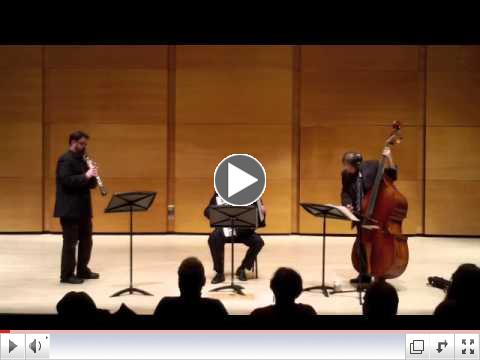 | |
The Michael Winograd Klezmer Trio plays West Hollywood 1.21.12
|
|
Author Shalom Auslander  in Conversation 1.24.11 * 8:00 P.M. Skirball Cultural Center
2701 North Sepulveda Los Angeles 90049
With the publication of his internationally bestselling memoir Foreskin's Lament, Shalom Auslander was hailed as a brilliant, provocative, and honest voice in American literature. Hear him in conversation with Seinfeld writer/producer Peter Mehlman about his highly anticipated and mordantly funny first novel, Hope: A Tragedy.
In the book, Solomon Kugel moves his family to upstate New York hoping to flee his past. Meanwhile, his sick mother keeps reminiscing about Nazi concentration camps she was never actually in, a pyromaniac is burning down homes in his new town, and Kugel finds a living piece of history hiding upstairs in his attic! A Q & A and book signing follow the program.
The program is free, but please reserve your seats in advance by visiting yiddi.sh/yMihVH. |
| Yiddish Culture around L.A.
Changing the World: Our Legacy in Yiddish Culture
Sholem 2012 Seminar Series
1.22.12 * 10:15 A.M.
Looking Beyond Rooftop Fiddling:
Sholem Aleichem as Chronicler
Guest Leader: Dr. Robert Adler Peckerar
Known, mostly, as a humorist (as were Mark Twain and Anton Chekhov), Sholem Aleichem was a keen observer of vast changes in Jewish life, both in Eastern Europe and the U.S. We'll look at examples and debate: Was Fiddler on the Roof a travesty?

Yitskhok Leybush Perets:
The Most Complete Jew of His Generation
Guest Leader: Marvin Zuckerman
Y.L. Perets was a sophisticated thinker who blended khasidic tales with socialist beliefs, while regarding both with a far-seeing, critical eye. We'll examine a prescient essay and two ground-breaking feminist stories.
20th (and 21st) Century Literature and Translations
We'll take a look at Yiddish literature in the Americas, the USSR and the Former Soviet Union and assess recent translations: the good and the bad. What is the present and future of Yiddish, its role in the progressive Secular Jewish movement, the Hebrew/Yiddish debate, etc.
Special Program Guests: Ruth Judkowitz and Eric Gordon with Songs of the Soviet Yiddish Era, selections from compositions by Shmuel Polonski to lyrics by Yiddish poets in 1931.
For more details on the seminar series or to reserve a space in advance, visit: yiddi.sh/sholemseminar.
|
|
MARK YOUR CALENDAR!
KlezCalifornia Yiddish Culture Festival
2.18.12 to 2.20.12
 Jewish Community Center of San Francisco 3200 California Street
San Francisco 94118
The 10th KlezCalifornia Yiddish Culture Festival will take place on Presidents Day Weekend, February 18-20, 2012, at the Jewish Community Center of San Francisco. Plan your trip up north for another fabulous weekend of fun in Yiddishland.
For a complete schedule of events, workshops, concerts, and classes or to register and reserve your tickets, visit yiddi.sh/klzcasf. |
|
Der Vortsman
Yiddish in the News as the Year Turned
The last days of 2011 included both triumphs and tragedies for our mameloshn (mother tongue).
A badly-headlined but well-written (Dec. 21) Associated Press feature - printed around the world - detailed the revived interest in Yiddish and its culture on college campuses throughout North America. (The AP writer later assured The Vortsman that she'd check out this newsletter.)
The highly respected New York Review of Books, in an article (Dec. 23) on strange places, included Birobidzhan, the Soviet-created Jewish Autonomous Region, whose official language was Yiddish, "the only place in history where this was ever so," and the fact that 150 Yiddish teachers have been trained there in the two decades since the Soviet Union was dissolved.  [Actually, The Editor notes that Yiddish was also an official language of the Belarusian Soviet Republic from its formation soon after the Bolshevik revolution, along with Belarusian, Russian, and Polish. And, believe it or not, Yiddish is, since 1999, an official minority language in--no, not Israel--SWEDEN!
In Belarus in 1926, Jews were the second largest national group and 90.7 percent of those 407,000 people declared Yiddish as their mother tongue. Then, many administrative forms were printed in Yiddish, along with the other three languages, including police citations. (Please don't ask Der Vortsman how one might say "overtime parking" in Yiddish.)]
 | |
Adrienne Cooper
(1946 - 2011)
|
Tragically, Yiddish song and culture lost one of its most talented and dedicated figures with the premature death of Adrienne Cooper (Dec. 25). Der Vortsman cherishes his many (non-musical) collaborations with her. Readers may click HERE to see and hear her singing many songs, and might wish to obtain some of her many CDs, including our favorites: in libshaft un in gerangl - "In Love And In Struggle: The Musical Legacy of the Jewish Labor Bund," and "Ghetto Tango."  | |
Simms Taback
(1932 - 2011)
|
On the same day, the renowned and honored children's book creator Simms Taback left our midst. His book Joseph Had a Little Overcoat, which was awarded the prestigious Caldecott Medal, includes faux clippings from Yiddish newspapers. It is based on the Yiddish folksong, "hob ikh mir a mantl," which Simms might have learned in kindershul No. 1 in the Bronx, or from his Yiddish-speaking parents. (For a more detailed description of Simms' Secular Yiddish background, including the origin of his unusual name, readers may contact Der Vortsman.) Kovid zeyer likhtikn ondenk - honor to their bright memories.
Returning to that AP feature, it led with a verse being sung by students of Yiddish at Emory University in Atlanta and used perfect YIVO transliteration:  | |
...Shpringen ale khsidim
|
"Az der rebe tantst, tantsn ale khsidim! In English, the lyrics mean: 'When the rebbe dances, so do all the Hasidim.'"
The Vortsman, in his often-irksome way, informed the writer that "The lyrics quoted...are the frequent misunderstanding of the original misnagdish (originating from opponents to Hasidism) version, which has his followers outdoing whatever the rebe does. Thus, 'az der rebe tantst, shpringen ale khsidim' - when the rebe dances, all the Hasidim leap. In other verses: eats/gorge, speaks/shout, sleeps/snore, etc." (For our readers: est/fresn, redt/shrayen, shloft/khropen.)
And, while AP hewed to the YIVO Standard, other forces in our culture (including YIVO!!) strayed.
 Given the (too) many versions of transliterating its name in the public arena, it was somewhat heartening to see that the United States Postal Service had made "official" the spelling on its annual festive postage stamp in two lines of type: "HANU-KKAH." (No explanation for the double "k," but at least the Germanic "Ch" was gone. Don't look a khanike gift-horse in the mouth, said we.)
Of course, a holiday supermarket ad was headlined "Happy Chanukah" while a product within the same ad used...the Postal Service's version.
Then came the holiday light(ning) bolt: The khanike fund appeal from the YIVO Institute for Jewish Research, on both its envelope and the letter inside, wished supporters "a freylekhn Hanukkah!" YIVO, of all institutes!
The Vortsman's in-box soon filled up with both angry and bemused responses. "How could they..." Our guess is that YIVO heard similarly from dozens if not scores or hundreds, because a few days later came an e-mail fund appeal from YIVO, headed: "Wishing you and your loved ones a freylekhn khanike..."
There's more. The rest of that greeting reverted to Modern Hebrew and abandoned the Standard: "...and chag sameach." We'll leave it to YIVO to explain how that phrase is to be pronounced, or why German is the "standard" for transliterating Hebrew.
Finally, while continuing the post-khanike theme, we revert to the primary purpose of this column: replying to readers' queries. A multimedia journalist, preparing to sing the original Yiddish text (by M. Rivesman) of "khanike, oy khanike," was stumped by the meaning of the last word in the line: un lomir ale tantsn in kon. A khosid (Hasid) had opined that "it should be GAN, the garden."S'hoybt zikh nit on - no way (lit. "It doesn't even have a beginning"). The only time Yiddish uses the Hebrew word "gan" is in gan-eydn - the Garden of Eden, heaven - and in the related, rarely-used term gan-eydn hatakhtn - the lower heaven or paradise on earth.Kon is a circle dance, prost un poshet - plainly and simply. May the new year bring us all more dancing and less sorrows! Kedey tsu zen dem arkhiv funem vortsman...
|
 Historical Yiddishkayt The image at the top of this month's YidBits comes from the 1926 children's poetry anthology Der kinder-deklamator (The Children's Declaimer), published by the Polish Dos Kind Press and distributed at the Gitlin bookstore in the heart of Warsaw's Jewish shopping district at Nalewki 1. The book is organized seasonally and illustated throughout with etchings. This one appears in the winter section along with the lines of Avrom Reisin's poem: "hulyet, hulyet, beyze vintn (Rave, rave, wicked winds)":
"Hulyet, hulyet, beyze vintn,
Yetst iz ayer tsayt.
Lang vet doyern der vinter-
Zumer iz nokh vayt!
Rave, oh rave, you wicked winds,
Now your time is here.
Winter will remain yet longer-
Summer is still far!"
Like us on Facebook for more Yiddishkayt history, including our new feature Today in Yiddishkayt, where you can find out all about major figures and events in the history of yiddishkayt throughout the world.
|
 YidBits and YidPicks are made possible in part by a grant
from the City of Los Angeles, Department of Cultural Affairs 
3780 Wilshire Boulevard, Suite 1000 | Los Angeles, CA 90010
|
|
|
|
|
|